Showing posts with label climate activist. Show all posts

Monday, February 17, 2020

Faith-based Climate Forum: 2020 Vision - Climate Leap Forward


2020 VISION: CLIMATE LEAP FORWARD    

A Forum to Meet the Climate Crisis


WHEN: Saturday, February 29, 9 AM - 3 PM

WHERE: Westminster Presbyterian Church, Buffalo [Map]

COST: $10, Students $5;  Lunch provided

REGISTER: Click here
NOTE: Register Before Wednesday, February 26 at 5:00 PM

Click image to enlarge
Keynote Speaker: Rev. Dr. Jim Antal

The Rev. Dr. Jim Antal, author of the acclaimed book, Climate Church, Climate World, is immediate past President of the Massachusetts Conference of the United Church Christ and a long-time climate activist, speaker and author.

Foreword by Bill McKibben


Breakout Group Topics and Facilitators

  • Youth Climate Strike - Rev. Micah Nutter Dowling
  • Creation Justice for Congregations - Roger Cook and Rev. Katelyn Nutter Dowling
  • Eco-Justice on West and East Sides of Buffalo - Joshua Wallace
  • Our Sacred Waters - Lynda Schneekloth
  • Renewable Energy (Wind/Solar) - Bob Ciesielski
  • WNY as a Region for Climate Refugees - Brendan Mehaffy
  • Climate Disaster Relief Responsibility - Rev. Amos Acree
  • Is Climate Change Real: What Scientists Tell Us - David Kowalski

Space is limited. For more Information and to Register, click here
NOTE: Ticket Sales Close Wednesday, February 26 at 5:00 PM

This conference is made possible in part by a grant from the Lilly Endowment.


Saturday, December 14, 2019

Climate Activist Greta Thundberg: TIME Magazine's 'Person of the Year'

TIME’s Editor-in-chief on why Greta Thunberg is the Person of the Year

BY EDWARD FELSENTHAL

It began with a story line familiar to every parent of every generation in every corner of the globe: an indignant teenager and a sudden burst of rebellion. It became one of the most unlikely and surely one of the swiftest ascents to global influence in history. Over the course of little more than a year, a 16-year-old from Stockholm went from a solitary protest on the cobblestones outside her country’s Parliament to leading a worldwide youth movement; from a schoolkid conjugating verbs in French class to meeting with the Secretary-General of the United Nations and receiving audiences with Presidents and the Pope; from a solo demonstrator with a hand-painted slogan (Skolstrejk för Klimatet) to inspiring millions of people across more than 150 countries to take to the streets on behalf of the planet we share.

Meaningful change rarely happens without the galvanizing force of influential individuals, and in 2019, the earth’s existential crisis found one in Greta Thunberg. Marshaling “Fridays for Future” protests throughout Europe; thundering, “How dare you!” at the world’s most powerful leaders in her viral U.N. speech; leading some 7 million climate strikers across the world in September and tens of thousands more in Madrid in early December, Thunberg has become the biggest voice on the biggest issue facing the planet—and the avatar of a broader generational shift in our culture that is playing out everywhere from the campuses of Hong Kong to the halls of Congress in Washington.

As Isabella Prata, the mother of two climate strikers in São Paulo, puts it, “Greta is an image of all of this generation.”
Thunberg demands action, and though far too many key measures are still moving in the wrong direction, there are nascent signs that action is coming. Corporate commitments to sustainable growth and net-zero emissions are on the rise. More than 60 countries have pledged to have a net carbon footprint of zero by 2050. American primary voters, especially in states beset by wildfires and flooding, are suddenly giving presidential candidates an earful on climate change. In Austria’s September elections, the Green Party more than tripled its support at the expense of the Social Democrats, a development a leader of the Social Democrats attributed to Thunberg—just before he resigned. Even as China burns half the world’s coal, it too is changing. It’s now home to roughly 45% of the electric cars and 99% of the electric buses in the world.
Thunberg stands on the shoulders—and at the side—of hundreds of thousands of others who’ve been blockading the streets and settling the science, many of them since before she was born. She is also the first to note that her privileged background makes her “one of the lucky ones,” as she puts it, in a crisis that disproportionately affects poor and indigenous communities. But this was the year the climate crisis went from behind the curtain to center stage, from ambient political noise to squarely on the world’s agenda, and no one did more to make that happen than Thunberg.

Wednesday, May 29, 2019

Teen Climate Activist Greta Thunberg - TIME Magazine's 100 Most Influential People

Greta Thunberg

By Emma González | TIME

The civil rights movement leaders of the 1960s had no idea that school-shooting survivors from one of the most southern points in the U.S. would lean on their teachings to power a modern nonviolent movement to end gun violence. Students around the world began standing up for their survival, leaning only on the fire inside them to prevent the pain they understand too intimately.

Greta Thunberg saw her power in us, and we in turn see our power in her. Fighting in her home country, Sweden, for a future free from pollution, environmental degradation and climate change, Greta is inspiring steadfast students and shaming apathetic adults.

She realized early on that the powers that be would be stacked against her and her mission, stating, “We can’t save the world by playing by the rules, because the rules have to be changed.” Greta went on to plan a multitude of student protests centered on action against our changing climate. Climate change is our reality, and youth activists like Greta are doing everything within their power to work against it, and demand a change.

González, a graduate of Marjory Stoneman Douglas High School, is a March for Our Lives co-founder


Greta Thunberg is part of TIME’s 2019 Next Generation Leaders series.


‘Now I Am Speaking to the Whole World.’

How Teen Climate Activist Greta Thunberg Got Everyone to Listen


Read the Cover Story at TIME online


Read earlier stories about Greta Thunberg and watch videos of her inspiring speeches at Re-ENERGIZE Buffalo


Thursday, September 14, 2017

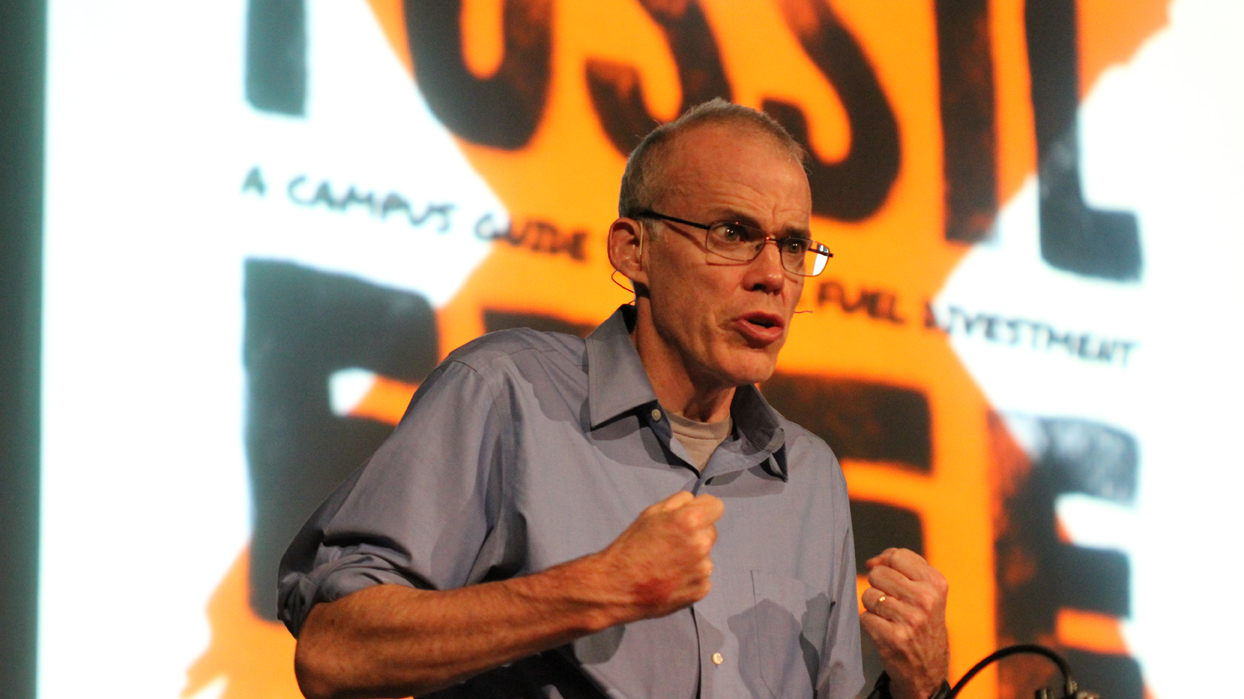
Bill McKibben - Renowned Environmental Author, Educator and Activist - to Speak in Buffalo


Bill McKibben 

will speak on 

“The Desperate Climate Fight: Ordinary People in an Extraordinary Moment,”

 Friday, Sept. 29, 8pm at the Albright-Knox Art Gallery.

Bill McKibben is the author of a dozen books about the environment, beginning with The End of Nature in 1989, which is regarded as the first book for a general audience on climate change, and has appeared in 24 languages. He is a founder of the first planet-wide, grassroots climate movement, 350.org, which has coordinated tens-of-thousands of rallies in 189 countries since 2009. 

Time Magazine called him 'the planet's best green journalist' and The Boston Globe said that he was 'probably the country's most important environmentalist.' 

Schumann Distinguished Scholar in Environmental Studies at Middlebury College, he holds honorary degrees from a dozen colleges and universities, including the State University of New York. In 2011 he was elected a fellow of the American Academy of Arts and Sciences. In 2014 was awarded the Right Livelihood Prize, sometimes called the ‘alternative Nobel.’

Bill McKibben will deliver the featured lecture of the Buffalo Humanities Festival, a three-day event featuring  environmentally-themed talks, music, performances, community debates and other activities that focus on issues of local, regional and national environmental justice and economic sustainability.

General admission tickets for Bill McKibben’s lecture are $20 for the public and $15 for students. Click here to buy tickets online.

There is a separate VIP reception with McKibben in the AK Café. The VIP reception is included with the purchase of a VIP Full Festival Pass, which is $60 for the public and $40 for students.

A complete festival schedule, including additional ticket information is available online -- Click here.

Sunday, November 6, 2016

Elect Hillary Clinton - Then Pressure Her, says Environmental Author, Bill McKibben

The Climate Movement Has to Elect Hillary Clinton—and Then Give Her Hell

Clinton’s no friend of the earth, but she can be pressured. Trump, on the other hand, would be an ecological and moral disaster.


By Bill McKibben | The Nation | Oct.18, 2016

It’s an odd feeling to be working for the election of someone you know dislikes you and your colleagues. I’ve spent a good chunk of this month trying to register voters on campuses in Pennsylvania and Ohio—registering them to vote against Donald Trump, which means pushing for the election of Hillary Clinton. It wasn’t how I wanted to spend the fall—I’d much rather have been campaigning for Bernie Sanders.

It didn’t get any easier when Wikileaks released a tape of Clinton talking to backers in the building-trades unions about the environmental work so many of us (including much of the rest of organized labor) have been engaged in for the last few years. “They come to my rallies and they yell at me and, you know, all the rest of it. They say, ‘Will you promise never to take any fossil fuels out of the earth ever again?’ No. I won’t promise that. Get a life, you know.”

The good news is that when Clinton wins, none of us will be under the slightest illusion about who she is.

I know the young people Clinton was talking about, and they weren’t demanding she somehow wave a wand and stop the fossil-fuel age overnight. They were asking her about the scientific studies showing that we can’t actually keep mining and drilling new supplies of coal, oil, and gas if we’re going to meet the temperature targets set with such fanfare in Paris last year. They were asking her to support the “Keep It In the Ground” Act introduced by Senator Jeff Merkley of Oregon and endorsed by a passel of other senators, from Barbara Boxer of California to Kirsten Gillibrand of New York. (Oh yeah, and that guy Bernie.) They were also asking her to take a stand against fracking, since new studies demonstrate quite clearly that the release of methane from the use of natural gas makes climate change worse. Publicly, she hemmed and hawed. When Bernie said in a debate that he was against fracking, period, Clinton said, “By the time we get through all of my conditions, I do not think there will be many places in America where fracking will continue to take place.” That was a pretty weak hedge to begin with, but we now know that privately she reassured the building trades unions: “My view is, I want to defend natural gas…. I want to defend fracking.”

Truth be told, these aren’t revelations. All of us working on climate issues have known this is how Clinton feels; she set up a whole wing of the State Department devoted to spreading fracking around the world. She’d favored the Keystone Pipeline from the start, and it was abundantly clear that only Sanders’s unexpected success in the primaries convinced her she’d have to change. (And it was only his refusal to endorse her until after the platform was agreed upon that made the platform into the fairly progressive document that it is, on climate and other issues). Still, it stings to see in black and white exactly how little regard she has for people fighting pipelines, frack wells, coal ports. Though truth be told, that was no huge surprise either: Politicians are forever saying they want people engaged in the political process, but most of them really just want people to vote and then go home.

So why are many of us out there working to beat Trump and elect her? Because Trump is truly a horror. He’s man who looks at fourth-grade girls and imagines that he’ll be dating them in ten years. He’s a racist. He knows next to nothing and lacks the intellectual curiosity to find out more. He’s a bully. He’s almost a cartoonish villain: If a writer invented a character this evil, no one would believe them. But he’s very nearly president.

Because environmentalists are not just concerned about the climate—we have allies and friends whom we support. And on some of those issues Clinton actually seems sincere: She clearly cares about women’s issues and understands that we are a nation of immigrants.

Because if Trump wins, we backslide on the small gains we’ve made. We’ve forced Clinton to say through gritted teeth that she opposes Keystone, for instance. She can’t, I think, go back on that. Trump has made it clear he’ll permit that and every other pipeline, just as soon as he’s done tearing up the Paris climate accord.

But none of that makes it easy to go out and support her. We’ve watched all fall as she’s maintained a studied silence about the most dramatic and important fossil-fuel fight of the moment, the Dakota Access Pipeline. Even the sight of attack dogs being used on peaceful Native American protesters didn’t move her to break ranks with her industry allies and that fraction of the labor movement that still wants to build pipelines. That’s craven on her part, pure and simple.

And so the good news is that when she wins, none of us will be under the slightest illusion about who she is. The honeymoon won’t last 10 minutes; on November 9 we’ll be organizing for science and human rights and against the timid incrementalism that marks her approach. It’s clear that we need to beat the creepy perv she’s running against. It’s also clear that we then need to press harder than ever for real progress on the biggest crisis the world has ever faced.

“Get a life”? We’ve got a planet, just one.

~   ~   ~

Monday, December 14, 2015

Bill McKibben: An Agreement to Finally Begin Addressing Global Warming

The New York Times
The Opinion Pages | Op-Ed Contributor

Falling Short on Climate in Paris

By BILL McKIBBEN    DEC. 13, 2015

Paris — THE climate news last week came out of Paris, where the world’s nations signed off on an agreement to finally begin addressing global warming.

Or, alternately, the climate news came out of Chennai, India, where hundreds died as flooding turned a city of five million into an island. And out of Britain, where the heaviest rains ever measured over 24 hours in the Lake District turned picturesque villages into lakes. And out of the Maldives in the Indian Ocean, where record rainfalls flooded atolls.

In the hot, sodden mess that is our planet as 2015 drags to a close, the pact reached in Paris feels, in a lot of ways, like an ambitious agreement designed for about 1995, when the first conference of parties to the United Nations Framework Convention on Climate Change took place in Berlin.

Under its provisions, nations have made voluntary pledges to begin reducing their carbon emissions. These are modest — the United States, for instance, plans to cut carbon dioxide emissions by 2025 by 12 to 19 percent from their levels in 1990. As the scrupulous scorekeepers at Climate Action Tracker, a non-government organization, put it, that’s a “medium” goal “at the least ambitious end of what would be a fair contribution.”

And that’s about par for the course here. Other countries, like gas station owners on opposite corners looking at each other’s prices, have calibrated their targets about the same: enough to keep both environmentalists and the fossil fuel industry from complaining too much. They have managed to provide enough financing to keep poor countries from walking out of the talks, but not enough to really push the renewables revolution into high gear. (Secretary of State John Kerry, in a fine speech, doubled America’s contribution — to $800 million, which is more than Congress is likely to appropriate, but risible compared to the need.)

So the world emerges, finally, with something like a climate accord, albeit unenforceable. If all parties kept their promises, the planet would warm by an estimated 6.3 degrees Fahrenheit, or 3.5 degrees Celsius, above pre-industrial levels. And that is way, way too much. We are set to pass the 1 degree Celsius mark this year, and that’s already enough to melt ice caps and push the sea level threateningly higher.

The irony is, an agreement like this adopted at the first climate conference in 1995 might have worked. Even then it wouldn’t have completely stopped global warming, but it would have given us a chance of meeting the 1.5 degree Celsius target that the world notionally agreed on.

Instead, as we now know from recent revelations about Exxon Mobil, those were exactly the years the fossil fuel industry set to work to make sure doubt replaced resolve. Its delaying tactics were cruelly effective. To meet that 1.5 degree target now would require breakneck action of a kind most nations aren’t really contemplating. At this point we’d need to leave almost all remaining coal and much of the oil and gas in the ground and put the world’s industries to work on an emergency basis building solar panels and windmills.

That we have any agreement at all, of course, is testament to the mighty movement that activists around the world have built over the last five years. At Copenhagen, world leaders could go home with nothing and pay no price.

That’s no longer true.

But what this means is that we need to build the movement even bigger in the coming years, so that the Paris agreement turns into a floor and not a ceiling for action. We’ll be blocking pipelines, fighting new coal mines, urging divestment from fossil fuels — trying, in short, to keep weakening the mighty industry that still stands in the way of real progress. With every major world leader now on the record saying they at least theoretically support bold action to make the transition to renewable energy, we’ve got a new tool to work with.

And we’ll try to keep hoping that it adds up fast enough to matter. That’s a little hard, as the hottest year ever measured draws to a close. One doesn’t want to rain on the Paris parade — but that’s what seems to be happening somewhere every day now.

Like Washington State, where high temperatures and heavy rainfalls led the governor to declare a state of emergency late last week, as landslides closed highways. Or Portland, Ore., which had the rainiest December day in its recorded history. Or Norway, which had the worst flooding in more than a century of record keeping. Or …

Bill McKibben is the founder of 350.org, the global grass-roots climate campaign. He teaches environmental studies at Middlebury College.


Article online at the New York Times: Falling Short on Climate in Paris

~   ~   ~ 
@billmckibben on Twitter


"We've got a 1.5 degree target, and a 3.5 degree plan. So, let's get to work"
~  Bill McKibben 

Sunday, May 24, 2015

Obama's Green Light on Arctic Oil Drilling - Bill McKibben Op-Ed

                                                        Adam Zyglis | The Buffalo News
Obama’s Catastrophic Climate-Change Denial

"It’s as if the tobacco companies were applying for permission to put cigarette machines in cancer wards.”

By BILL McKIBBEN  |  MAY 12, 2015  | Opinion | The New York Times

MIDDLEBURY, Vt. — THE Obama administration’s decision to give Shell Oil the go-ahead to drill in the Arctic shows why we may never win the fight against climate change. Even in this most extreme circumstance, no one seems able to stand up to the power of the fossil fuel industry. No one ever says no.

By “extreme” I don’t just mean that Shell will be drilling for oil in places where there’s no hope of cleaning up the inevitable spills (remember the ineptness of BP in the balmy, accessible Gulf of Mexico, and now transpose it 40 degrees of latitude north, into some of the harshest seas on the planet).

No, what’s most extreme here is the irresponsibility of Shell, now abetted by the White House. A quarter century ago, scientists warned that if we kept burning fossil fuel at current rates we’d melt the Arctic. The fossil fuel industry (and most everyone else in power) ignored those warnings, and what do you know: The Arctic is melting, to the extent that people now are planning to race yachts through the Northwest Passage, which until very recently required an icebreaker to navigate.

Now, having watched the Arctic melt, does Shell take that experience and conclude that it’s in fact time to invest heavily in solar panels and wind turbines? No. Instead, it applies to be first in line to drill for yet more oil in the Chukchi Sea, between Alaska and Siberia. Wash, rinse, repeat. Talk about salting wounds and adding insult to injury: It’s as if the tobacco companies were applying for permission to put cigarette machines in cancer wards.

And the White House gave Shell the license. In his first term, President Obama mostly ignored climate change, and he ran for re-election barely mentioning the subject until Hurricane Sandy made it unavoidable in the closing days of the campaign.

Theoretically his second term was going to be different. The president has stepped up the rhetoric, and he’s shown some willingness to go after domestic greenhouse gas emissions. His new regulations on coal-fired power plants will be helpful, as will his 2012 rules on fuel efficiency for cars and trucks. And his nonbinding pledge that America will cut emissions in future decades may make the upcoming climate talks in Paris less of a fiasco than earlier talks in Copenhagen.

But you can’t deal with climate on the demand side alone. If we keep digging up more coal, gas and oil, it will get burned, if not here, then somewhere else. This is precisely the conclusion that a study in the journal Nature reached in January: If we’re to have any chance of meeting even Mr. Obama’s weak goal of holding temperature rise to 2 degrees Celsius, we have to leave most carbon underground. That paper, in particular, showed that the coal reserves in the Powder River basin in the West and the oil in Canada’s tar sands had to be left largely untouched, and that there was no climate-friendly scenario in which any oil or gas could be drilled in the Arctic.

And yet Mr. Obama — acting on his own, since these are all executive actions requiring nothing from Congress — has opened huge swaths of the Powder River basin to new coal mining. He’s still studying whether to approve the Keystone XL pipeline, though the country’s leading climate scientists have all told him it would be a disaster. And now he’s given Shell the green light, meaning that, as with Keystone, it will be up to the environmental movement to block the plan (“kayaktivists” plan to gather this weekend in Seattle’s harbor, trying to prevent Shell from basing its Arctic rigs there).

This is not climate denial of the Republican sort, where people simply pretend the science isn’t real. This is climate denial of the status quo sort, where people accept the science, and indeed make long speeches about the immorality of passing on a ruined world to our children. They just deny the meaning of the science, which is that we must keep carbon in the ground.

Bill McKibben teaches environmental studies at Middlebury College and is the founder of the global climate campaign 350.org.

Wednesday, September 17, 2014

Buffalo Climate Activists Takin’ it to the NYC Streets

Advocates for action on climate change will take it to the streets in New York City

By Lynda Schneekloth
Chairwoman, Sierra Club Niagara Group

 It’s not as if no one has tried to get the attention of the government of the United States and other world leaders since the early 1990s.

It’s not as if we haven’t known that carbon dioxide is a greenhouse gas for well over 100 years. But the world is full of distractions, disinformation and people getting very wealthy by not addressing climate change and staying the course with fossil fuels. One has to admit that the climate scientists had it wrong 20 years ago. They thought that we had until 2050 to substantially limit greenhouse gas emissions to avoid serious catastrophe.

The Kyoto Protocol, now 17 years old, outlined actions we might take, but didn’t. The United States in particular seems to be sleepwalking into the future regarding climate change. Now we know that scientists seriously underestimated how quickly things were changing.

The latest report from the Intergovernmental Panel on Climate Change tells us of the irreversible climate impacts occurring right now, and outlines disastrous impacts into the future. Leaders in the climate movement tell us this is Decade Zero. We take action now or it will be too late.

The question is: How do we get the attention of people? How do we connect with world leaders, our president and Congress, governors and local officials? How do we get the attention of everybody, since climate disruption is not simply an environmental problem, it is a planetary crisis? Pope Francis says, “I think a question that we’re not asking ourselves is: ‘Isn’t humanity committing suicide with this indiscriminate and tyrannical use of nature?’ ” Suicide or perhaps genocide?

Now is the time to take to the streets, to shift this movement out of a segment of our society and to bring all of the people together to be more effective. It is time to take to the streets to address climate change, to invest in a new energy economy that has green jobs, to stop the monopoly of the fossil fuel giants and build shared energy production and distribution – in other words, to fight for a just transition to a new, more sustainable world.

And we are taking to the streets on Sunday in New York City at the gathering of world leaders at the United Nations, who will meet to discuss world action on climate change.

More than 100,000 people are expected to march – an alliance of environmental, climate and labor movements, indigenous communities and other social, economic and democratic justice movements, all calling for ecological sanity.

We are building a big, loud movement together, for it appears that taking to the streets is the only way to protect global ecosystems from collapse and ensure a future for our children.

The text of the above article was originally published as an 'Another Voice' op-ed at The Buffalo News online on September 16, 2014. 
~  ~  ~

For Bus Tickets to the NY City Climate March,  Click Here

"Students on hundreds of campuses, and thousands of youth vote leaders across the country are bringing their power and voices to the People's Climate March to say enough is enough," said Maura Cowley, director of Energy Action Coalition.


Tuesday, May 7, 2013

Bill McKibben to Deliver Commencement Address

Bill McKibben, Author, Educator, Environmentalist, to Deliver Commencement Address, Receive Dean's Medal

The School of Architecture and Planning Commencement will be held on Friday, May 10, 2013 at 5:00 p.m. in the Center for the Arts Mainstage Theatre, North Campus of the University at Buffalo. The event is open to the public.

Special seating is available in the balcony area for guests who will be attending the ceremony that are not directly connected to the graduates. No tickets are required to attend.

As this event is a celebration for the students, you are invited to stay for the full program.  However, since this occasion represents a special opportunity to hear Bill McKibben speak about important issues in today’s fragile world, a musical interlude will be included after his speech to allow guests to quietly exit the auditorium. 

Bill McKibben is the author of a dozen books about the environment, beginning with The End of Nature in 1989, which is regarded as the first book for a general audience on climate change. He is a founder of the grassroots climate campaign 350.org, which has coordinated 15,000 rallies in 189 countries since 2009. Time Magazine called him 'the planet's best green journalist' and the Boston Globe said in 2010 that he was 'probably the country's most important environmentalist.' Schumann Distinguished Scholar at Middlebury College, he holds honorary degrees from a dozen colleges, including the Universities of Massachusetts and Maine, the State University of New York, and Whittier and Colgate Colleges. In 2011 he was elected a fellow of the American Academy of Arts and Sciences.