Showing posts with label global warming. Show all posts

Saturday, December 14, 2019

Climate Activist Greta Thundberg: TIME Magazine's 'Person of the Year'

TIME’s Editor-in-chief on why Greta Thunberg is the Person of the Year

BY EDWARD FELSENTHAL

It began with a story line familiar to every parent of every generation in every corner of the globe: an indignant teenager and a sudden burst of rebellion. It became one of the most unlikely and surely one of the swiftest ascents to global influence in history. Over the course of little more than a year, a 16-year-old from Stockholm went from a solitary protest on the cobblestones outside her country’s Parliament to leading a worldwide youth movement; from a schoolkid conjugating verbs in French class to meeting with the Secretary-General of the United Nations and receiving audiences with Presidents and the Pope; from a solo demonstrator with a hand-painted slogan (Skolstrejk för Klimatet) to inspiring millions of people across more than 150 countries to take to the streets on behalf of the planet we share.

Meaningful change rarely happens without the galvanizing force of influential individuals, and in 2019, the earth’s existential crisis found one in Greta Thunberg. Marshaling “Fridays for Future” protests throughout Europe; thundering, “How dare you!” at the world’s most powerful leaders in her viral U.N. speech; leading some 7 million climate strikers across the world in September and tens of thousands more in Madrid in early December, Thunberg has become the biggest voice on the biggest issue facing the planet—and the avatar of a broader generational shift in our culture that is playing out everywhere from the campuses of Hong Kong to the halls of Congress in Washington.

As Isabella Prata, the mother of two climate strikers in São Paulo, puts it, “Greta is an image of all of this generation.”
Thunberg demands action, and though far too many key measures are still moving in the wrong direction, there are nascent signs that action is coming. Corporate commitments to sustainable growth and net-zero emissions are on the rise. More than 60 countries have pledged to have a net carbon footprint of zero by 2050. American primary voters, especially in states beset by wildfires and flooding, are suddenly giving presidential candidates an earful on climate change. In Austria’s September elections, the Green Party more than tripled its support at the expense of the Social Democrats, a development a leader of the Social Democrats attributed to Thunberg—just before he resigned. Even as China burns half the world’s coal, it too is changing. It’s now home to roughly 45% of the electric cars and 99% of the electric buses in the world.
Thunberg stands on the shoulders—and at the side—of hundreds of thousands of others who’ve been blockading the streets and settling the science, many of them since before she was born. She is also the first to note that her privileged background makes her “one of the lucky ones,” as she puts it, in a crisis that disproportionately affects poor and indigenous communities. But this was the year the climate crisis went from behind the curtain to center stage, from ambient political noise to squarely on the world’s agenda, and no one did more to make that happen than Thunberg.

Sunday, September 15, 2019

Alaskans See Impacts of Climate Crisis as Arctic Warms Two Times Faster than the Planet

Climate Crisis plays out in Alaska.

Arctic warming twice as fast as rest of planet. 

By Bill Weir, CNN Chief Climate Correspondent | September 09, 2019

ANCHORAGE, Alaska (CNN) - Alaska's summer of fire and no ice is smashing records.

With the Arctic warming twice as fast as the rest of the planet, America's "Last Frontier" feels like the first in line to see, smell and feel the unsettling signs of a climate in crisis.

There are the smoky skies and dripping glaciers, dead salmon and hauled-out walrus but scientists also worry about the changes that are harder to see, from toxic algae blooms in the Bering Sea to insects from the Lower 48 bringing new diseases north.

The head shaking among longtime locals really began on the Fourth of July, when at 90 degrees, Anchorage was hotter than Key West.

A dome of hot, dry air over the southern part of the state refused to budge. When lightning struck the Kenai Peninsula, it was just the beginning of a wilderness inferno unlike any other in memory.

Like rainy clockwork, Alaska's fire season usually ends August 1 but the Swan Lake fire is still burning and only 37% contained. To the relief of exhausted fire crews and worried residents, September is bringing the first moisture in weeks but the most populous part of the state is still swallowing more smoke than ever.

"We've had more than twice as many smoky hours in 2019 than in any other season, and in fact, almost as many as all other years combined," says Brian Brettschneider, a climatologist at the University of Alaska.

Strolling in short sleeves atop the rapidly melting Spencer Glacier, Brettschneider lists one superlative after another, pulled from a century's worth of records that predate Alaskan statehood. "Eight of our top 13 warmest days on record are this year," he says. "We didn't just get a little bit past the old marks, we really blasted past them."

He points to the bare rock and dirt 150 feet above us where the glacier once stood. "This is half as thin as it was not very long ago." Every drip is headed to sea, which makes what is happening here directly relevant to New York, Miami, Dubai, Osaka, Hong Kong and countless beach towns in between. According to the European Space Agency, melting Alaskan ice has contributed more to sea level rise than Greenland, Antarctica or any other part of the world.

And then there are the fish, so vital to the economy. While Bristol Bay saw another epic salmon run this season, more and more streams are just too warm for the fish to spawn.

"We definitely have reports from around the state where we've found dead fish that have not made it to their spawning grounds," says Sue Mauger, science director for the nonprofit Cook Inletkeeper. "They still have the eggs inside and have not spawned. Those are just lost future generations."

She has been measuring streams for almost two decades and while the warming trend was obvious, she is stunned by the speed. "The temperatures we saw this summer were what we expected for 2069 -- we're 50 years ahead of where we thought we would be for stream temperatures."

Climate Change threatens Food and Water Supplies, while Farming and Land Practices fuel the change, says new U.N. Report

Changing climate imperils global food and water supplies, new U.N. study finds

Agriculture and other land use accounts for 23 percent of human-caused greenhouse gas emissions.

by Brady Dennis | Aug 8 2019 | Washington Post

The world cannot avoid the worst impacts of climate change without making serious changes to the ways humans grow food, raise livestock and manage forests, according to a landmark study Thursday from an international group of scientists.

The sprawling report from the U.N. Intergovernmental Panel on Climate Change (IPCC) examines how land use around the world contributes to the warming of Earth’s atmosphere. But the report also details how climate change is already threatening food and water supplies for humans: turning arable land to desert; degrading soil; and increasing the threat of droughts, floods and other extreme weather that can wreak havoc on crops.

It makes clear that although fossil fuel-burning power plants and automobile tailpipes are the largest drivers of climate change, activities such as agriculture and forestry account for an estimated 23 percent of total human-caused greenhouse gas emissions.

“We already knew that humanity’s over-exploitation of the Earth’s lands is a key driver of climate change, and that we need to take urgent, ambitious action to address these issues,” Jennifer Tabola, director for global climate strategy at the Nature Conservancy, said in a statement. “We have a choice: do we balance the needs of human development and nature, or do we sleepwalk into a future of failing farmlands, eroding soil, collapsing ecosystems and dwindling food resources?”

Four years ago in Paris, world leaders agreed to take aggressive action to keep global warming to “well below” 2 degree Celsius, compared with pre-industrial levels. Their aspiration was to limit warming to no more than 1.5 degrees Celsius (the world has already warmed 1 degree).

But Thursday’s report, which includes the work of 107 experts from 52 countries, underscores that meeting those goals will require fundamental changes not only to the transportation and energy sectors, but also by cutting emissions from agriculture and deforestation — all while feeding growing populations.dd

Last fall, IPCC scientists found that nations will need to take “unprecedented” actions to cut their carbon emissions over the next decade to avoid devastating effects from rising seas, more intense storms and other impacts of climate change.

[The world has just over a decade to get climate change under control, U.N. scientists say]

They also detailed how such a radical transformation would require large swaths of land currently used to produce food to instead be converted to growing trees that store carbon and crops designated for energy use.

“Such large transitions pose profound challenges for sustainable management of the various demands on land for human settlements, food, livestock feed, fibre, bioenergy, carbon storage, biodiversity and other ecosystem services,” the authors wrote at the time.

A significant amount of agricultural emissions comes from livestock — primarily from the belches of cattle. Additionally, while all soils emit some nitrous oxide, soil on farms often emits higher levels because of nitrogen that is added in the form of manure, fertilizers or other material. Meanwhile, deforestation in places such as the Amazon and Indonesia has harmed the ability of forests to retain carbon dioxide from the atmosphere.

Wednesday, June 5, 2019

TAKE ACTION: Demand a Vote on the NYS Climate and Community Protection Act

TAKE ACTION: 

Tell our State elected leaders: our Planet, our Health, and our Communities can't wait. 

We need New York State to lead on Climate Justice and pass the Climate and Community Protection Act (CCPA) this session. 

We have a Majority of Sponsors in the Senate and the Assembly. 

We demand a VOTE on the CCPA NOW!

Click Here to Take Action

NY Renews is a coalition of more than 150 grassroots, state, and national organizations. We aim to make New York State the nation’s leader in tackling the climate crisis while protecting workers and lifting up communities.

Thursday, May 24, 2018

Distinguished Lecture: Global Warming and a Call to Action - How ice foretells the next systemic transformation

`

Global Warming and a Call to Action: 
How ice foretells the next systemic transformation

Thursday, June 7, 2018
2:30pm - 5:00pm
Hotel at the Lafayette - Marquis Ballroom
391 Washington St., Buffalo

Sebastian Copeland will chronicle some of his seminal expedition crossings, and share impressions on what it means to spend three months of isolated travel in the most remote polar environments. Illustrated with award winning photographs, his anecdotes range from close encounters with polar bears, falling through the ice into the frigid Arctic ocean, surviving hurricanes in a tent, and traveling with severe frostbites, broken bones and food shortage. Copeland will explore the meaning of living in a truly antagonistic environment and how he learned to love everything about survival to find epiphanies and discover the true essence of self. More pointedly, Copeland makes the case that climate transformations taking place in the polar regions foretell global systemic chaos from anthropogenic activities, and their geopolitical consequences.

Following the lecture there will be a Fireside Chat hosted by Prof. Richard Alley and a Distinguished Lecture Recognition

Limited space available
Please RSVP by June 6, 2018 - Click here

Monday, February 5, 2018

2017: Historic and Most Expensive Year of U.S. Weather and Climate Disasters on Our Continuously Warming Planet

Billion-Dollar Weather and Climate Disasters
1st Quarter Release | National Oceanic & Atmospheric Administration (NOAA)

The U.S. has sustained 219 weather and climate disasters since 1980 where overall damages/costs reached or exceeded $1 billion (including CPI adjustment to 2017). The total cost of these 219 events exceeds $1.5 trillion. This total now includes the initial cost estimates for Hurricanes Harvey, Irma and Maria.

In 2017, there were 16 weather and climate disaster events with losses exceeding $1 billion each across the United States. These events included 1 drought event, 2 flooding events, 1 freeze event, 8 severe storm events, 3 tropical cyclone events, and 1 wildfire event. Overall, these events resulted in the deaths of 362 people and had significant economic effects on the areas impacted.

[Click image to enlarge]

During 2017, the U.S. experienced a historic year of weather and climate disasters. In total, the U.S. was impacted by 16 separate billion-dollar disaster events tying 2011 for the record number of billion-dollar disasters for an entire calendar year. In fact, 2017 arguably has more events than 2011 given that our analysis traditionally counts all U.S. billion-dollar wildfires, as regional-scale, seasonal events, not as multiple isolated events.

More notable than the high frequency of these events is the cumulative cost, which exceeds $300 billion in 2017 — a new U.S. annual record. The cumulative damage of these 16 U.S. events during 2017 is $306.2 billion, which shatters the previous U.S. annual record cost of $214.8 billion (CPI-adjusted), established in 2005 due to the impacts of Hurricanes Dennis, Katrina, Rita and Wilma.

Read more at NOAA


World's Oceans Were Hottest On Record In 2017, Study Finds
by Mary Papenfuss | 1.27.2018 | HuffPost

The world’s oceans in 2017 were the hottest ever recorded, scientists revealed in a new study recently published.

Institute of Atmospheric Physics - [Click image to enlarge]
The findings were based on an updated analysis of the top 6,000 feet of the world’s seas by the Institute of Atmospheric Physics and the Chinese Academy of Science.

“The long-term warming trend driven by human activities continued unabated,” researchers said in the study, which was published in the journal Advances in Atmospheric Sciences. “The high ocean temperatures in recent years have occurred as greenhouse gas levels in the atmosphere have also risen.”

Owing to its “large heat capacity, the ocean accumulates the warming derived from human activities; indeed, more than 90 percent of Earth’s residual heat related to global warming is absorbed by the ocean,” according to the researchers. “As such, the global ocean heat content record robustly represents the signature of global warming.”

While ocean temperatures dropped slightly in 2016 because of a massive El Nino effect, the last five years were still the hottest recorded for the world’s oceans. The second hottest ocean year was 2015.

Read more at HuffPost


Global Heat Records 2017

1.18.2018  |  Climate Signals | NASA Map

2017 is among the hottest years on record, spawning a number of all-time global heat records, and it occurred without the warming influence of El Niño, which boosted the global average temperatures of the previous two record hot years. According to the NASA surface global temperature dataset, 2017 was the 2nd-hottest year on record for the globe. By NOAA's calculations, it was the 3rd hottest.(The two datasets use different baseline periods and methods to analyze Earth’s polar regions and global temperatures.)

The NASA map below shows Earth’s average global temperature from 2013 to 2017, as compared to a baseline average from 1951 to 1980. Yellows, oranges, and reds show regions warmer than the baseline temperature. (Credits: NASA’s Scientific Visualization Studio) 


One of the strongest findings of climate science is that global warming amplifies the intensity, duration and frequency of extreme heat events. These events occur on multiple time scales, from a single day or week, to months or entire seasons.

The number of local record-breaking monthly temperature extremes worldwide is now on average five times larger than expected in a climate with no long-term warming, implying that on average there is an 80 percent chance that a new monthly heat record is due to climate change.

An April 2017 study found that anthropogenic global warming had a significant hand in the temperatures seen during the hottest month and on the hottest day on record throughout much of the world from 1931–2016. The study found that climate change made heat records more likely and more severe for about 80 percent of the area of the globe with good observational data.
 
Read more at Climate Signals

Thursday, January 11, 2018

New York City will Divest from Fossil Fuels -- Filed Lawsuit against Major Oil Companies

Empire State Building on Jan.10, 2018
[click image to enlarge]
Climate Action: Mayor, Comptroller, Trustees Announce First-In-The-Nation Goal to Divest From Fossil Fuels

January 10, 2018  |  NYC.gov

City also filing suit against five largest fossil fuel companies, seeking damages to help protect city from climate change


NEW YORK—Mayor Bill de Blasio, Comptroller Scott M. Stringer and other trustees of the City’s $189 Billion pension funds today announced a goal to divest City funds from fossil fuel reserve owners within five years, which would make New York City the first major US pension plan to do so. In a first-in-the-nation step towards the goal of divestment, the Mayor and Comptroller will submit a joint resolution to pension fund trustees to begin analyzing ways to divest from fossil fuel owners in a responsible way that is fully consistent with fiduciary obligations. In total, the City’s five pension funds hold roughly $5 billion in the securities of over 190 fossil fuel companies. The City’s move is among the most significant divestment efforts in the world to date.

"New York City is standing up for future generations by becoming the first major US city to divest our pension funds from fossil fuels,” said Mayor de Blasio. “At the same time, we’re bringing the fight against climate change straight to the fossil fuel companies that knew about its effects and intentionally misled the public to protect their profits. As climate change continues to worsen, it’s up to the fossil fuel companies whose greed put us in this position to shoulder the cost of making New York safer and more resilient.”

“This is a first-in-the-nation step to protect our future and our planet – for this generation and the next. Safeguarding the retirement of our city’s police officers, teachers, firefighters and city workers is our top priority, and we believe that their financial future is linked to the sustainability of the planet. Our announcement sends a message to the world that a brighter economy rests on being green,” Comptroller Stringer said. “It’s complex, it will take time, and there are going to be many steps. But we’re breaking new ground, and we are committed to forging a path forward while remaining laser-focused on our role as fiduciaries to the Systems and beneficiaries we serve.”

The Mayor also announced that the City has filed a lawsuit against the five largest investor-owned fossil fuel companies as measured by their contributions to global warming. The City will be seeking damages from BP, Chevron, ConocoPhillips, Exxon Mobil, and Royal Dutch Shell for the billions of dollars the City will spend to protect New Yorkers from the effects of climate change. This includes damages to pay for harm that we’ve already seen and damages that are necessary to address harm we expect to happen over the course of this century.

New York City’s lawsuit seeks to recover the billions needed to fund climate change resiliency measures that the City needs to implement to protect the City, its property, and its residents from the ongoing and increasingly severe impacts of climate change. This includes physical infrastructure, like coastal protections, upgraded water and sewer infrastructure, and heat mitigation, but also public health campaigns, for example to help protect residents from the effects of extreme heat. To recover from past harm and prepare for future events, New York City is already executing an over $20 billion resiliency program to protect New Yorkers and build resilience against rising seas, more powerful storms, and hotter temperatures.

Recently uncovered documents make it clear that the fossil fuel industry was well aware of the effects that burning fossil fuels would have on the planet’s atmosphere and the expected impacts of climate change as far back as at least the 1980s. Nonetheless, they deliberately engaged in a campaign of deception and denial about global warming and its impacts, even while profiting from the sale of fossil fuels and protecting their own assets from the effects of rising seas and a changing climate. More than half of the greenhouse gas pollution from the fossil fuel industry has occurred since 1988, according to a recent analysis. Sea levels have risen about one foot since 1900 with much of that rise due to climate change, the most powerful storms are becoming more frequent, and flooding is becoming more frequent and intense.

Monday, November 6, 2017

Federal Agencies Report that Humans are the Dominant Cause of Climate Change


Directly contradicting the Trump administration position on climate change, 13 federal agencies released an extensive scientific report that says humans are the dominant cause of the global temperature rise that has occurred since 1901, creating the warmest period in human history.

Over the past 115 years, global average temperatures have increased 1.8 degrees Fahrenheit (1 degree Celsius), leading to record breaking weather events and temperature extremes. According to the report, the global, long-term warming trend is “unambiguous” and there is “no convincing alternative explanation” that anything other than humans are to blame because of the cars we drive, the power plants we operate, and the forests we destroy.
 
Surprisingly, the report was approved for release by the White House. However, the findings come as the Trump administration is defending its climate change policies on several fronts. 

Public drafts of the report have circulated for months, making it politically perilous to tinker with the findings. So, with editing a high-risk affair and the report required by Congress, the administration may have just decided to downplay it, said John Holdren, who ran the Office of Science and Technology Policy under President Barack Obama.

"It would do more harm to block this report than to let it out," Holdren, now a Harvard University environmental policy professor, said in an interview. "They’re letting it out on a Friday afternoon, which is pretty much the standard approach for letting out something that you don’t want to get a lot of attention." 

The government is required to produce the national assessment every four years. This time, the report is split into two documents, one that lays out the fundamental science of climate change and the other that shows how the United States is being affected on a regional basis. Combined, the two documents total over 2,000 pages.

The first document, called the Climate Science Special Report, is a finalized report, having been peer-reviewed by the National Academy of Sciences and vetted by experts across government agencies.


The climate of the United States is strongly connected to the changing global climate. The short statements listed below highlight past, current, and projected climate changes for the United States and the globe:

Thursday, September 14, 2017

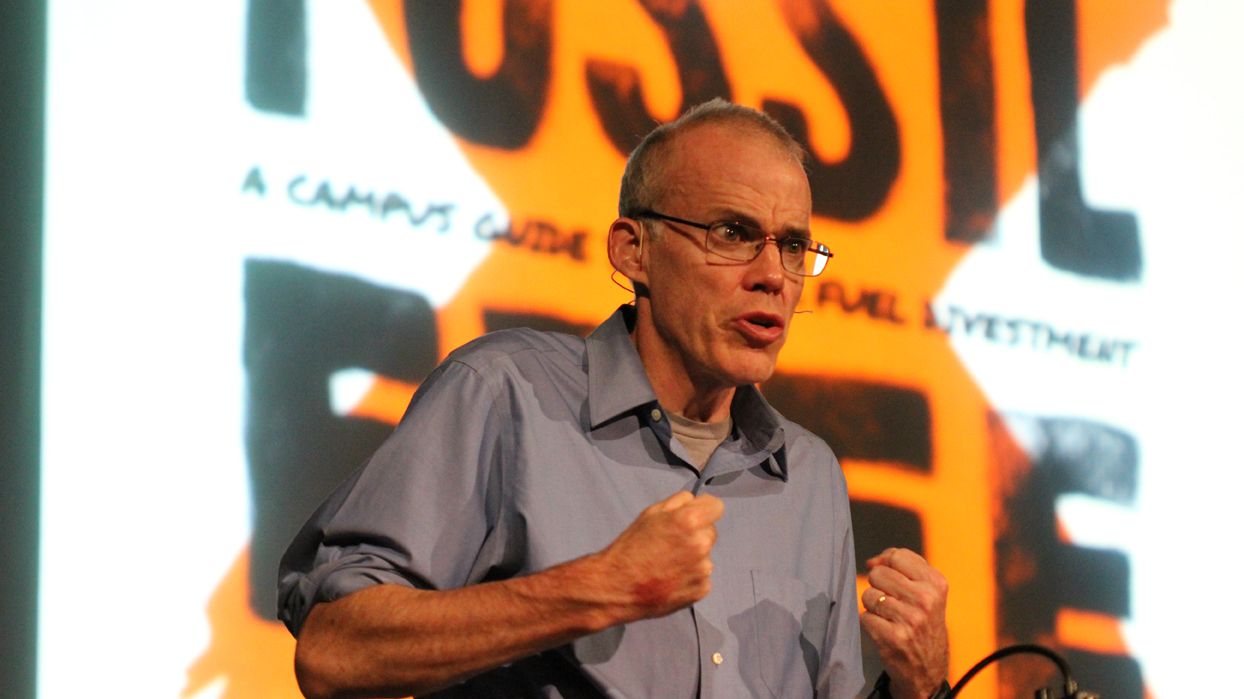
Bill McKibben - Renowned Environmental Author, Educator and Activist - to Speak in Buffalo


Bill McKibben 

will speak on 

“The Desperate Climate Fight: Ordinary People in an Extraordinary Moment,”

 Friday, Sept. 29, 8pm at the Albright-Knox Art Gallery.

Bill McKibben is the author of a dozen books about the environment, beginning with The End of Nature in 1989, which is regarded as the first book for a general audience on climate change, and has appeared in 24 languages. He is a founder of the first planet-wide, grassroots climate movement, 350.org, which has coordinated tens-of-thousands of rallies in 189 countries since 2009. 

Time Magazine called him 'the planet's best green journalist' and The Boston Globe said that he was 'probably the country's most important environmentalist.' 

Schumann Distinguished Scholar in Environmental Studies at Middlebury College, he holds honorary degrees from a dozen colleges and universities, including the State University of New York. In 2011 he was elected a fellow of the American Academy of Arts and Sciences. In 2014 was awarded the Right Livelihood Prize, sometimes called the ‘alternative Nobel.’

Bill McKibben will deliver the featured lecture of the Buffalo Humanities Festival, a three-day event featuring  environmentally-themed talks, music, performances, community debates and other activities that focus on issues of local, regional and national environmental justice and economic sustainability.

General admission tickets for Bill McKibben’s lecture are $20 for the public and $15 for students. Click here to buy tickets online.

There is a separate VIP reception with McKibben in the AK Café. The VIP reception is included with the purchase of a VIP Full Festival Pass, which is $60 for the public and $40 for students.

A complete festival schedule, including additional ticket information is available online -- Click here.

Sunday, May 7, 2017

Buffalo Activists Traveled to Washington D.C. to March for Climate, Jobs and Justice

By David Kowalski

100 People Traveled from Buffalo to D.C. in Buses Chartered by the Sierra Club 


Photos below show a few of the groups of people after departing the bus at the RFK Stadium in D.C.. [Click images to enlarge] 

 Buffalo Youth for Climate Justice

 Students from the University at Buffalo

Burmese Family from Buffalo

Buffalo Women for the Planet and a System Change
~   ~   ~

We traveled via the Metro Rail to the Capitol area where groups were assembling in preparation for the march.

Below is the front line of the Sierra Club group. 
Chapters from States around the U.S. were represented.

Leading the Sierra contingent is Aaron Mair, 
National President of the Sierra Club 

Earlier that morning, Aaron Mair was interviewed near the Capitol about the march. He said: 
“We're rising up to save our planet, but more importantly to offer solutions. This is not just a rise up for the sake of rising up. But it's a rise up to save our democracy. Because at the end of day, there's no planet B and there's no second leader. Our country was the world leader when it came to climate change, and the world leader with climate solutions.”
A video of that interview can be viewed here.


David and his son, Jason Kowalski, U.S. Policy Director 
at 350.org in D.C., met up at the march
Just days before the historic Peoples Climate mobilization, Senators Jeff Merkley and Bernie Sanders introduced the ‘100 by ‘50 Act’, a piece of legislation that calls for 100% clean energy by 2050. While recognizing the legislation likely won’t move under the Trump administration, the Senators and their supporters view this as a ‘roadmap for America.’
 

Days after the march, Jason Kowalski commented at 350.org: “If this type of visionary legislation can be introduced at the federal level under the Trump administration, there’s no excuse left for officials at the city and state level. At the Peoples Climate March, we put forward this vision nationally. Now we’ll hold every elected official accountable — no one is off the hook.”

By working at the local and regional level, communities will organize for powerful and lasting change, forcing elected officials to choose a side: that of Trump and his fossil fuel billionaire cabinet, or that of the people fighting for a stable climate and an economy that works for everyone.

Wednesday, February 22, 2017

Denial and 'Alternative Facts' haven’t stopped the Earth from Warming to Record-shattering Levels

We’re now breaking global temperature records once every three years 


February 2016 was the warmest February in 136 years of Nasa’s modern temperature records. Global temperature records were broken throughout 2016. Photograph: GISS/NASA 

According to NASA, in 2016 the Earth’s surface temperature shattered the previous record for hottest year set in 2015, which broke the previous record set in 2014, which  in turn had broken the previous record set in 2005.

Global temperature wasn’t the only record-setter in 2016. Global warming causes climate change, and North America saw its highest number of storms and floods in over four decades. Globally, we saw over 1.5 times more extreme weather catastrophes in 2016 than the average over the past 30 years. Global sea ice cover plunged to a record low as well. California endured a fifth consecutive year of its worst drought in over a millennium. A drought also savaged the maize harvest in Southern Africa, causing a famine. The list of climate consequences goes on.

Read more at The Guardian

~     ~     ~ 

National Oceanic and Atmospheric Administration (NOAA) Data:
2016 was the warmest year in the 137-year series compiled by NOAA (graph, below). Sixteen of the 17 warmest years on record occurred in the consecutive years 2001 through 2016. The five warmest years have all occurred since 2010. 


Friday, December 9, 2016

Gas Pipeline Leaked for Over 1 Year in a NY State Forest

The gas leak shown in the video.
On Nov. 30, Ryan Weatherley and Tim Ross, both of Olean, NY, were hunting in a NY State Forest near Franklinville  where they came across an unusual site. A large quantity of water was rising up above the surface of a puddle. It resembled the beginnings of a geyser eruption (see photo).

Nearby was a marker in the ground indicating that this was the location of a National Fuel Gas pipeline, suggesting that this was a gas leak. Weatherley spotted a total of 4 leaks in the area and recorded a closeup video of one of them.

See a 10 second video clip showing a closeup of the leak in the photo with sound: click here to open in YouTube.

View the full video (2 minutes): click here

Weatherley called National Fuel Gas who said they would handle it and that he should leave the area, according to a statement posted online with his video. He went back to his car with his friend and the company called back. They verified that there was a gas leak and that they wouldn't be able to do anything until after Christmas.

Contacted by the Olean Times Herald, Karen L. Merkel, National Fuel corporate communications director, said on Friday, Dec. 2, that the company has been aware of the leak for some time.

When it was discovered, it was determined to be “a Type 3 leak that did not require an urgent fix based on its location” in a rural area, Merkel said.

“We knew about the leak long before we saw it on YouTube,” Merkel said.

Late Friday afternoon, Merkel said crews had measured the extent of the leak, which had not changed in over a year.

However, Merkel said, “because of the volume of calls received about this leak in light of the Facebook and YouTube videos, we are in the process of repairing it so our system isn't inundated with leak calls that does not involve an inherent safety risk.”

To read the full report at Olean Times Herald, click here.

See also: Gas leak has now been repaired, click here.

Editorial Comments:
National Fuel knew that this pipeline was leaking for over 1 year and did nothing to stop it until it was spotted by citizens and posted on YouTube. Surprising, and at the same time, troubling.

This was not a small leak. Those were not simply gas bubbles in the photo and video. A sizeable mass of water was constantly being lifted above the surface of the surrounding puddle. It would take substantial amount of gas to do that and to constantly maintain it.

It's difficult to accept that this was not a safety hazard. What would happen if someone tossed a lighted cigarette butt in the vicinity of that leak? Explosion? Forest fire?

Safety aside, natural gas is primarily methane, which is a potent greenhouse gas that contributes to global warming and climate change. National Fuel said that the extent of the leak "had not changed in over a year."

How many Type 3 leaks like this exist for a year or more in all of the gas pipelines in NY State? What is the total contribution of all such leaks to greenhouse gas emissions in the State? We need to know this information to accurately assess the full contribution of natural gas operations to global warming.

Gas pipeline (blue line) in Boyce Hill State Forest near Franklinville, NY

Sunday, November 6, 2016

Paris Climate Agreement Is Now International Law

Environmentalists say the agreement is just the first step of a much longer and complicated process of transitioning away from fossil fuels.

AP Report  | November 5, 2015

The Paris Agreement to combat climate change became international law on Friday — a landmark deal about tackling global warming amid growing fears that the world is becoming hotter even faster than scientists expected.

1.5 deg. C limit prevents flooding Island Nations and coasts
So far, 96 countries, accounting for just over two-thirds of the world's greenhouse gas emissions, have formally joined the accord, which seeks to limit global warming to 2 degrees Celsius (3.6 degrees Fahrenheit). More countries are expected to come aboard in the coming weeks and months.

U.N. Secretary General Ban-Ki moon praised the civil groups for mobilizing hundreds of millions of people to back fighting climate change, but warned the outcome remained uncertain.

"We are still in a race against time. We need to transition to a low-emissions and climate-resilient future," Ban said. "Now is the time to strengthen global resolve, do what science demands and seize the opportunity to build a safer more sustainable world for all."

Scientists praised the speed at which the agreement, signed by over 190 parties last December in Paris, has come into force, saying it underscores a new commitment by the international community to address the problem which is melting polar ice caps, sending sea levels rising and transforming vast swaths of arable land into desert.

But environmentalists say the agreement is just the first step of a much longer and complicated process of transitioning away from fossil fuels, which currently supply the bulk of the planet's energy needs and also are the primary drivers of global warming.

Naomi Ages, climate liability project lead at Greenpeace, said that it was up to civil society groups to hold governments and corporations responsible.

"We know that existing fossil fuel projects will push us past 2 degrees, so we're mobilizing around the world to keep it in the ground and stop development of new fossil fuel projects," Ages said.

While the Paris agreement is legally binding, the emissions reductions that each country has committed to are not. Instead, the agreement seeks to create a transparent system that will allow the public to monitor how well each country is doing in meeting its goals in hopes that this will motivate them to transition more quickly to clean, renewable energy like wind, solar and hydropower.

The agreement also requires governments to develop climate action plans that will be periodically revised and replaced with new, even more ambitious, plans. Many of these details will begin to be addressed at the COP22 climate change meeting that begins next week in Marrakech, Morocco.

Read more here and at The Guardian.

~   ~   ~


One of the main focus points of the COP22 meeting will be how to make the abstract goals outlined in the Paris agreement - to accelerate and intensify the actions and investments needed for a sustainable low carbon future - a concrete reality.

Hundreds of engineers, researchers and scientists will be attending what the UN has described as a "brainstorming session" to look at ways to de-carbonise our lives.

They will consider a wide range of clean energy technologies, including renewables, carbon capture systems, battery technology, and green transport.

The Paris agreement does not detail how the private sector or carbon markets can be used in emission-reductions efforts, but does endorse them as a way of reducing carbon emissions.

The Paris agreement, however, sends a clear signal to companies around the world that they must look to reduce emissions now, or end up paying a high price later.

Read more here: The Paris climate agreement and why it matters

~   ~   ~ 

[Click image to enlarge]

Thursday, August 4, 2016

We Need to Stop Dangerous Global Warming

By David Kowalski

Excess greenhouse gas in the atmosphere caused by burning fossil fuels - coal, oil, or natural gas - is now resulting in dangerous global warming. Fifteen of the sixteen warmest years have occurred since the year 2000. 2014 set a new record and 2015 topped it. 2016 is on track for even more extreme warming, with January through June showing record-breaking global temperatures (NASA graph, below).
[Click image to enlarge] 

Burning fossil fuels emits carbon dioxide (CO2), a greenhouse gas that traps heat and is raising Earth’s temperature. Human-caused CO2 levels in the atmosphere are now about 40% greater than the highest levels detected in Nature in the past 650,000 years (NASA graph with annotations by D.K., below).


[Click image to enlarge]

We are now in uncharted territory. Human activity, specifically the burning of fossil fuels, is generating more CO2 gas than Nature can absorb from the atmosphere.

The persistent accumulation of CO2 in the atmosphere, which began with the Industrial Revolution, is raising the temperature of our planet. This is certainly cause for alarm, since rising global temperatures are impacting weather patterns, driving climate change and having dire consequences.

It’s Getting HOT in Here!
Nowhere is the fingerprint of climate change more evident than with extreme heat.

This year, summer got it's hottest start ever in three states: California, New Mexico and Arizona. Over 30 million people were under heat warnings or advisories.  Record-shattering temperatures of 109° occurred in Los Angeles and 122° in Palm Springs. Tragically, on June 20th, six people died outdoors in 118° heat in Arizona. Between 600 and 1,500 heat-related deaths occur in an average summer in the U.S.

Heat waves last for days and are deadly. Severe heat waves in Europe in 2003 and Russia in 2010 resulted in tens of thousands of deaths. In 2015, thousands died in heat waves that occurred in India and Pakistan. A Chicago heat wave with temperatures up to 104° killed nearly 750 people in 1995. A California heat wave with temperatures as high as 119° caused up to 450 deaths in 2006.

A combination of heat and humidity (the Heat Index) that makes it feel like it’s 105° or hotter is termed a ‘danger day’. Warming temperatures are about to push U.S. cities into a new mode where danger days happen regularly. By 2030, 84 cities with nearly one-third of the U.S. population are projected to deal with at least 20 danger days annually if carbon emissions continue unabated. In the South, Miami is projected to have 126 danger days by 2030.

Buffalo is projected to have fewer danger days (6) by 2030, but the number will increase to 15 by 2050 if carbon emissions continue unabated. By 2030, Buffalo is projected to have 38 ‘extreme caution’ days, when the heat index tops 90°. The latter days are the greatest threat to children and the elderly, who are more sensitive to the heat, and to those in residences without air conditioning.

Cutting carbon emissions worldwide is vital to reducing the risk of heat-related death and illness.

Drought, Flooding, Wildfires and Extreme Weather
Higher temperatures increase the amount of moisture that evaporates from land and water, and have contributed to drought in some areas. At the same time, increased water vapor in the atmosphere caused by the elevated warming has resulted in heavy downpours in other areas.

Extreme events linked to global warming and predicted earlier by climate scientists are in fact occurring now around the world and here at home: unprecedented drought in California, destructive downpours and historic flooding in Texas and West Virginia, more intense hurricanes like Sandy in New York, and raging wildfires in the Southwest U.S. and in Canada.

Drought, flooding and excess heat threaten human health and safety. Such events can also cause crop destruction, food insecurity and human conflicts, threatening our ability to sustain life on this planet.

Ocean Warming, Ice Melting, and Sea-level Rise
Oceans, which cover 70% of our planet, are absorbing 93% of the excess heat of global warming. Hot ocean waters are bleaching and killing coral reefs, disrupting ecosystems that harbor fish, an important food source. Continued warming of oceans will increase melting of polar ice sheets, cause extensive sea level rise and flood coastal cities, including New York City and Miami. This would be catastrophic -- displacing large populations, causing unrest and costing trillions of dollars. Low-lying island nations face the threat of being swallowed by rising seas.

What Can YOU Do?
There is no doubt that global warming and climate change are happening now. We all need to take action locally to help end human-caused global warming.

It is essential that we push our governments at national, state and local levels adopt measures to prevent the worst impacts of global warming. Bold energy policies with mandates and timelines are urgently needed to shift to clean, renewable energy, increase energy efficiency, and cut carbon emissions that cause global warming.

Let your elected officials know that ending global warming pollution by transitioning to clean, renewable energy also presents real opportunities. It will not only stabilize the climate and energy prices, but also lead to good-paying jobs, healthier communities and a more just society.

And don't forget to Vote! Vote for candidates who seek to protect People and the Planet.

Get more informed and involved with activists in the Sierra Club Niagara Group through monthly Executive Committee meetings, presentations/discussions at a Writers Group, and a Climate & Energy Committee meeting (Email: NiagaraSierra@gmail.com)

Join one of the groups affiliated with the Climate Justice Coalition of Western New York, including faith groups, labor unions, social/economic justice groups, Working Families Party and others. For more information, Email ClimateJusticeBuffalo@gmail.com.

Request a presentation on Environmental Stewardship, Climate Change and Clean Energy Solutions for your group. Email ClimateJusticeBuffalo@gmail.com

Thursday, June 2, 2016

Elon Musk: What Will It Take to Address the Climate Crisis?

Elon Musk, Tesla Motors CEO, breaks down climate change for students at The Sorbonne in Paris right before the historic Climate Change Conference in which over 190 nations agreed to reduce global warming emissions to keep the global average temperature increase below 2 degrees C (3.6 degrees F) relative to pre-industrial temperatures.

What will it take to address the Climate Crisis? Watch the 12 minute video for Elon Musk's view:


Tuesday, April 26, 2016

NY State Attorney General Speaks on Climate Change and Economic Justice in Buffalo

By David Kowalski

Eric Schneiderman    photo D.Kowalski
NYS Attorney General Eric Schneiderman visited Buffalo on April 21 and presented a talk to a full auditorium at the Frank E. Merriweather Library. The event was sponsored by the Climate Justice Coalition of WNY, NY Renews, Open Buffalo and PUSH Buffalo and was followed by a panel discussion led by Clarke Gocker.

Schneiderman's talk on climate change and economic justice is covered below. A subsequent story will cover another part of the talk about his office's investigations of fossil fuel industries responsible for the global warming pollution and their denial of the problem.

Eric Schneiderman spoke about the need to unite the campaigns that deal with the crisis of climate change with a campaign to deal with economic inequality. He said that the two have to go hand in hand if we are going to save the planet and if we’re going to be the country that we’re supposed to be. He added:
The movement that we have to build has got to go beyond the traditional environmental movement. We have to get everyone to understand that we are all in this together, and that we have to deal with the issue of the destruction of our planet while building a world that supports all families. We can do this. Because this does require a revamping of our energy sector, new jobs will be created. We have to make sure they are good, family-supporting jobs that go to the people that need them in every community.
We have to take action and we have to say what people don't say enough, which is, climate change is real, and it's happening now, and it's affecting us now.
It is undeniable that Earth is warming. Last month was the hottest March since humans began to use instruments to measure the temperature. The month before that was the hottest February ever, the month before that the hottest January ever, 2015 was the hottest year ever, 2014 was the second hottest.

Schneiderman said that the northeastern United States is seeing much more violent and much more frequent storm patterns. In 2011, Hurricane Irene dropped over 11 inches of rain in 24 hours causing catastrophic flooding in the Hudson River Valley and the Adirondacks. Thirty-one counties were declared disaster areas.

The following year, Superstorm Sandy hit New York Harbor with increased intensity because it passed over ocean water warmed by heat trapped by greenhouse gases and was 9°F warmer than it would have been in the past. Also, the sea level was over a foot higher than it was before the beginning of the 20th century, before burning of fossil fuels accelerated. Consequently, Sandy flooded an additional 80,000 people's homes that would have been had the water had been at the pre-industrial sea level.

"There is no responsible scientist who disputes the fact that burning fossil fuels is contributing to warming of the planet. There is no legitimate debate as to that," Schneiderman said.

He pointed out that the argument against environmentalism is usually couched in terms of destroying jobs and hurting the economy. Schneiderman said:
You are the people who are going to build a movement that says we know that’s all a lie. We know the way to create good green family-supporting jobs is to lean in to the move to renewables. And the states that lean in early, are the states that are going to do better in this incredibly competitive Global market.
New York I'm proud to say is leaning in. But as most you know public officials do what their constituents make them do. And this is true of our friends as well as our enemies. We need to encourage our friends and give them support and we need to dissuade our enemies from opposing our efforts to re-establish equality and the state of the planet. It's not really much more complicated than that.

Monday, April 11, 2016

Bill McKibben: Fracking Will Not Save Our Climate

Global Warming’s Terrifying New Chemistry

Our leaders thought fracking would save our climate. They were wrong. Very wrong.

By Bill McKibben | March 23, 2016 | The Nation

Global warming is, in the end, not about the noisy political battles here on the planet’s surface. It actually happens in constant, silent interactions in the atmosphere, where the molecular structure of certain gases traps heat that would otherwise radiate back out to space. If you get the chemistry wrong, it doesn’t matter how many landmark climate agreements you sign or how many speeches you give. And it appears the United States may have gotten the chemistry wrong. Really wrong.

There’s one greenhouse gas everyone knows about: carbon dioxide, which is what you get when you burn fossil fuels. We talk about a “price on carbon” or argue about a carbon tax; our leaders boast about modest “carbon reductions.” But in the last few weeks, CO2’s nasty little brother has gotten some serious press. Meet methane, otherwise known as CH4.

In February, Harvard researchers published an explosive paper in Geophysical Research Letters. Using satellite data and ground observations, they concluded that the nation as a whole is leaking methane in massive quantities. Between 2002 and 2014, the data showed that US methane emissions increased by more than 30 percent, accounting for 30 to 60 percent of an enormous spike in methane in the entire planet’s atmosphere.

To the extent our leaders have cared about climate change, they’ve fixed on CO2. Partly as a result, coal-fired power plants have begun to close across the country. They’ve been replaced mostly with ones that burn natural gas, which is primarily composed of methane. Because burning natural gas releases significantly less carbon dioxide than burning coal, CO2 emissions have begun to trend slowly downward, allowing politicians to take a bow. But this new Harvard data, which comes on the heels of other aerial surveys showing big methane leakage, suggests that our new natural-gas infrastructure has been bleeding methane into the atmosphere in record quantities. And molecule for molecule, this unburned methane is much, much more efficient at trapping heat than carbon dioxide.

The EPA insisted this wasn’t happening, that methane was on the decline just like CO2. But it turns out, as some scientists have been insisting for years, the EPA was wrong. Really wrong. This error is the rough equivalent of the New York Stock Exchange announcing tomorrow that the Dow Jones isn’t really at 17,000: Its computer program has been making a mistake, and your index fund actually stands at 11,000.

These leaks are big enough to wipe out a large share of the gains from the Obama administration’s work on climate change—all those closed coal mines and fuel-efficient cars. In fact, it’s even possible that America’s contribution to global warming increased during the Obama years. The methane story is utterly at odds with what we’ve been telling ourselves, not to mention what we’ve been telling the rest of the planet. It undercuts the promises we made at the climate talks in Paris. It’s a disaster—and one that seems set to spre2ad.

The Obama administration, to its credit, seems to be waking up to the problem. Over the winter, the EPA began to revise its methane calculations, and in early March, the United States reached an agreement with Canada to begin the arduous task of stanching some of the leaks from all that new gas infrastructure. But none of this gets to the core problem, which is the rapid spread of fracking. Carbon dioxide is driving the great warming of the planet, but CO2 isn’t doing it alone. It’s time to take methane seriously.

To understand how we got here, it’s necessary to remember what a savior fracked natural gas looked like to many people, environmentalists included. As George W. Bush took hold of power in Washington, coal was ascendant, here and around the globe. Cheap and plentiful, it was most visibly underwriting the stunning growth of the economy in China, where, by some estimates, a new coal-fired power plant was opening every week. The coal boom didn’t just mean smoggy skies over Beijing; it meant the planet’s invisible cloud of carbon dioxide was growing faster than ever, and with it the certainty of dramatic global warming.

So lots of people thought it was great news when natural-gas wildcatters began rapidly expanding fracking in the last decade. Fracking involves exploding the sub-surface geology so that gas can leak out through newly opened pores; its refinement brought online new shale deposits across the continent—most notably the Marcellus Shale, stretching from West Virginia up into Pennsylvania and New York. The quantities of gas that geologists said might be available were so vast that they were measured in trillions of cubic feet and in centuries of supply.

The apparently happy fact was that when you burn natural gas, it releases half as much carbon dioxide as coal. A power plant that burned natural gas would therefore, or so the reasoning went, be half as bad for global warming as a power plant that burned coal. Natural gas was also cheap—so, from a politician’s point of view, fracking was a win-win situation. You could appease the environmentalists with their incessant yammering about climate change without having to run up the cost of electricity. It would be painless environmentalism, the equivalent of losing weight by cutting your hair.

Tuesday, March 22, 2016

March Climate Madness: Colleges Turning Up the Heat

[Click image to enlarge]

Over 100 million Americans have filled out NCAA college basketball tournament brackets this week -- it's March Madness!

But some colleges are now playing a new game that's associated with a different form of madness. This calls for a new type of brackets.

Above are shown the Koch Brackets, 32 colleges that receive money via Donors Trust, a shadowy conduit for a network of conservative/libertarian financiers that oppose environmental regulations and fund efforts to deny that burning fossil fuels causes global warming.

So, which colleges are helping the Koch fossil fuel barons turn up the heat on the planet? The brackets above show the dollar amounts for the top 12. 

In genuine free-market fashion, the outcome is predetermined by dollar amount, with powerhouse George Mason University ($3.1 million) lapping the field. This is based on Donors Trust’s most recent filing of Form 990 with the Internal Revenue Service, which lists all grants from the year 2014. 

The Northern Virginia school and its Mercatus Center are to libertarian think tanks what Connecticut is to women’s basketball. 

For more information, read Jane Mayer’s book, Dark Money, which traces the lineage of the Koch brothers, Donors Trust, and conservative philanthropy’s quiet entry into big-time academic spending.

Source: Analysis - The Koch Brothers, by Peter Dykstra, Environmental Health News, March 17, 2016

Friday, January 8, 2016

Naomi Klein, Author and Climate Justice Activist, to Speak


CAPITALISM vs. THE CLIMATE: 
Reflections on the 2015 UN Climate Change Conference

Featuring: Naomi Klein

Sunday, January 24, 2016 – 4:00pm

Finger Lakes Community College, Canandaigua [MAP]
 
Known for her political analyses and criticism of corporate globalization and of corporate capitalism, Naomi Klein is the author of five books, including The Shock Doctrine, a bestselling critical analysis of the history of neoliberalism, which promotes a high-consumption, ­carbon-hungry system.

Her latest book is This Changes Everything: Capitalism vs. the Climate (2014). Klein writes that “Our economic system and our planetary system are now at war.” 

“There is still time to avoid catastrophic warming,” she contends, “but not within the rules of capitalism as they are currently constructed. Which is surely the best argument there has ever been for changing those rules.” 

MODERATOR: Michael Winship, an award-winning television writer and producer, will moderate the conversation with Ms. Klein.

Online Tickets $15 - PURCHASE HERE