Changing climate imperils global food and water supplies, new U.N. study finds
Agriculture and other land use accounts for 23 percent of human-caused greenhouse gas emissions.
by Brady Dennis | Aug 8 2019 | Washington Post
The world cannot avoid the worst impacts of climate change without making serious changes to the ways humans grow food, raise livestock and manage forests, according to a landmark study Thursday from an international group of scientists.
The sprawling report from the U.N. Intergovernmental Panel on Climate Change (IPCC) examines how land use around the world contributes to the warming of Earth’s atmosphere. But the report also details how climate change is already threatening food and water supplies for humans: turning arable land to desert; degrading soil; and increasing the threat of droughts, floods and other extreme weather that can wreak havoc on crops.
It makes clear that although fossil fuel-burning power plants and automobile tailpipes are the largest drivers of climate change, activities such as agriculture and forestry account for an estimated 23 percent of total human-caused greenhouse gas emissions.
“We already knew that humanity’s over-exploitation of the Earth’s lands is a key driver of climate change, and that we need to take urgent, ambitious action to address these issues,” Jennifer Tabola, director for global climate strategy at the Nature Conservancy, said in a statement. “We have a choice: do we balance the needs of human development and nature, or do we sleepwalk into a future of failing farmlands, eroding soil, collapsing ecosystems and dwindling food resources?”
Four years ago in Paris, world leaders agreed to take aggressive action to keep global warming to “well below” 2 degree Celsius, compared with pre-industrial levels. Their aspiration was to limit warming to no more than 1.5 degrees Celsius (the world has already warmed 1 degree).
But Thursday’s report, which includes the work of 107 experts from 52 countries, underscores that meeting those goals will require fundamental changes not only to the transportation and energy sectors, but also by cutting emissions from agriculture and deforestation — all while feeding growing populations.dd
Last fall, IPCC scientists found that nations will need to take “unprecedented” actions to cut their carbon emissions over the next decade to avoid devastating effects from rising seas, more intense storms and other impacts of climate change.
[The world has just over a decade to get climate change under control, U.N. scientists say]
They also detailed how such a radical transformation would require large swaths of land currently used to produce food to instead be converted to growing trees that store carbon and crops designated for energy use.
“Such large transitions pose profound challenges for sustainable management of the various demands on land for human settlements, food, livestock feed, fibre, bioenergy, carbon storage, biodiversity and other ecosystem services,” the authors wrote at the time.
A significant amount of agricultural emissions comes from livestock — primarily from the belches of cattle. Additionally, while all soils emit some nitrous oxide, soil on farms often emits higher levels because of nitrogen that is added in the form of manure, fertilizers or other material. Meanwhile, deforestation in places such as the Amazon and Indonesia has harmed the ability of forests to retain carbon dioxide from the atmosphere.
Showing posts with label drought. Show all posts
Showing posts with label drought. Show all posts
Sunday, September 15, 2019


Friday, June 28, 2019
Climate Crisis is Our Third World War -- Requires a Bold Response
The climate crisis is our third world war. It needs a bold response
Joseph Stiglitz | June 4, 2019 | The Guardian
Critics of the Green New Deal ask if we can afford it.
But we can’t afford not to: our civilization is at stake.
Advocates of the Green New Deal say there is great urgency in dealing with the climate crisis and highlight the scale and scope of what is required to combat it. They are right. They use the term “New Deal” to evoke the massive response by Franklin Delano Roosevelt and the United States government to the Great Depression. An even better analogy would be the country’s mobilization to fight World War II.
Critics ask, “Can we afford it?” and complain that Green New Deal proponents confound the fight to preserve the planet, to which all right-minded individuals should agree, with a more controversial agenda for societal transformation. On both accounts the critics are wrong.
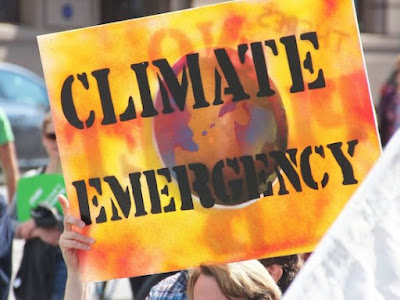
Yes, we can afford it, with the right fiscal policies and collective will. But more importantly, we must afford it. The climate emergency is our third world war. Our lives and civilization as we know it are at stake, just as they were in the second world war.
When the US was attacked during the second world war no one asked, “Can we afford to fight the war?” It was an existential matter. We could not afford not to fight it. The same goes for the climate crisis. Here, we are already experiencing the direct costs of ignoring the issue – in recent years the country has lost almost 2% of GDP in weather-related disasters, which include floods, hurricanes, and forest fires. The cost to our health from climate-related diseases is just being tabulated, but it, too, will run into the tens of billions of dollars – not to mention the as-yet-uncounted number of lives lost. We will pay for climate breakdown one way or another, so it makes sense to spend money now to reduce emissions rather than wait until later to pay a lot more for the consequences – not just from weather but also from rising sea levels. It’s a cliche, but it’s true: an ounce of prevention is worth a pound of cure.
The war on the climate emergency, if correctly waged, would actually be good for the economy – just as the second world war set the stage for America’s golden economic era , with the fastest rate of growth in its history amidst shared prosperity. The Green New Deal would stimulate demand, ensuring that all available resources were used; and the transition to the green economy would likely usher in a new boom. Trump’s focus on the industries of the past, like coal, is strangling the much more sensible move to wind and solar power. More jobs by far will be created in renewable energy than will be lost in coal.
Read more at The Guardian
Joseph E Stiglitz is a university professor at Columbia, the 2001 recipient of the Nobel Memorial Prize in Economics, a former chairman of the Council of Economic Advisers, a former chief economist of the World Bank and the author, most recently, of People, Power, and Profits: Progressive Capitalism for an Age of Discontent
Joseph Stiglitz | June 4, 2019 | The Guardian
Critics of the Green New Deal ask if we can afford it.
But we can’t afford not to: our civilization is at stake.
Advocates of the Green New Deal say there is great urgency in dealing with the climate crisis and highlight the scale and scope of what is required to combat it. They are right. They use the term “New Deal” to evoke the massive response by Franklin Delano Roosevelt and the United States government to the Great Depression. An even better analogy would be the country’s mobilization to fight World War II.
Critics ask, “Can we afford it?” and complain that Green New Deal proponents confound the fight to preserve the planet, to which all right-minded individuals should agree, with a more controversial agenda for societal transformation. On both accounts the critics are wrong.
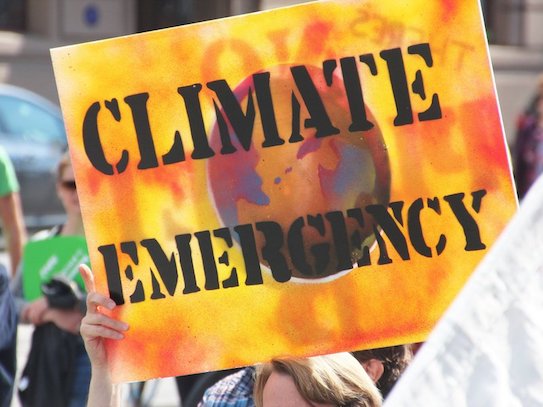
Yes, we can afford it, with the right fiscal policies and collective will. But more importantly, we must afford it. The climate emergency is our third world war. Our lives and civilization as we know it are at stake, just as they were in the second world war.
When the US was attacked during the second world war no one asked, “Can we afford to fight the war?” It was an existential matter. We could not afford not to fight it. The same goes for the climate crisis. Here, we are already experiencing the direct costs of ignoring the issue – in recent years the country has lost almost 2% of GDP in weather-related disasters, which include floods, hurricanes, and forest fires. The cost to our health from climate-related diseases is just being tabulated, but it, too, will run into the tens of billions of dollars – not to mention the as-yet-uncounted number of lives lost. We will pay for climate breakdown one way or another, so it makes sense to spend money now to reduce emissions rather than wait until later to pay a lot more for the consequences – not just from weather but also from rising sea levels. It’s a cliche, but it’s true: an ounce of prevention is worth a pound of cure.
The war on the climate emergency, if correctly waged, would actually be good for the economy – just as the second world war set the stage for America’s golden economic era , with the fastest rate of growth in its history amidst shared prosperity. The Green New Deal would stimulate demand, ensuring that all available resources were used; and the transition to the green economy would likely usher in a new boom. Trump’s focus on the industries of the past, like coal, is strangling the much more sensible move to wind and solar power. More jobs by far will be created in renewable energy than will be lost in coal.
Read more at The Guardian
Joseph E Stiglitz is a university professor at Columbia, the 2001 recipient of the Nobel Memorial Prize in Economics, a former chairman of the Council of Economic Advisers, a former chief economist of the World Bank and the author, most recently, of People, Power, and Profits: Progressive Capitalism for an Age of Discontent
~ ~ ~
Thursday, November 8, 2018
Open Discussion: Climate and America’s Migration Issues
THE SIERRA CLUB
CLIMATE AND CLEAN ENERGY WRITERS GROUP
Thursday, November 15, 2018
Climate and America’s Migration Issues
CLIMATE AND CLEAN ENERGY WRITERS GROUP
Thursday, November 15, 2018
Climate and America’s Migration Issues

Climate Change is driving migration throughout the world by demolishing homes, destroying harvests and disrupting local economies. The UN states that “An annual average of 21.5 million people have been forcibly displaced by weather-related sudden onset hazards – such as floods, storms, wildfires, extreme temperature – each year since 2008”. At the same time, immigration policy is an issue that is dividing America.
Join a discussion of this crucial issue!
6:00-7:30 PM - Crane Branch Library - 633 Elmwood at Highland
2nd Floor Meeting Room
Free and open to the public – writers and non-writers alike
billnowa@gmail.com for info
Wednesday, January 24, 2018
Inspired by NY City's Lawsuit against Fossil Fuel Companies over Climate Change, USA's 2nd Biggest City Considers Similar Move
Los Angeles could become the next city to sue fossil fuel companies over climate change
Natasha Geiling - Jan 17, 2018 - ThinkProgress
When New York City announced last week that it would be suing five of the world’s most powerful fossil fuel companies for their role in creating — and perpetuating — global warming, environmental activist Bill McKibben lauded the move as “a major tipping point” in the movement to companies accountable for climate change.
Now, the second largest city in the United States appears to be following New York’s lead, exploring the potential for filing a similar lawsuit against fossil fuel companies. On January 13 — just three days after New York publicly announced its lawsuit — two Los Angeles city councilmembers introduced a motion asking the City Attorney to look into legal options against fossil fuel companies, as well as prepare an official legal statement in support of New York City’s case.
Councilmember Mike Bonin (D), who introduced the motion along with Councilmember Paul Koretz (D), told ThinkProgress that the inspiration for the motion came directly from the example set by New York.
“When I saw the news about what de Blasio was doing, it made me say, ‘Why the hell aren’t we doing this here?’” Bonin said. “We like to think that the winds blow from the West to the East, but occasionally, the winds come back.”
Bonin, who represents the western part of Los Angeles, including many of the city’s coastal neighborhoods, called the potential lawsuit part of a “multi-pronged” approach to tackling the issue of climate change through city government. In 2016, the city council unanimously supported a motion to transition to 100 percent renewable energy, and that the local transportation agency has taken steps to transition its municipal fleet of buses from diesel engines to electric. Los Angeles Mayor Eric Garcetti (D) has pledged to push forward with local climate action in the face of the Trump administration’s federal agenda, which has prioritized fossil fuel extraction over renewable energy.
"We are facing a federal government that is engaged in — if I was going to be charitable, a dereliction of duty, but I think it’s actually a deliberate sabotage our our planet," Bonin said. “It’s incumbent upon the cities to lead.”
If Los Angeles does decide to file a lawsuit against fossil fuel companies, it would join a group of seven other cities and counties — which, save for New York, are all located in California — seeking to hold companies similarly accountable. Six of those cases claim damages associated with climate-fueled sea level rise, and ask that fossil fuel companies pay into a fund to help offset the cost of updating infrastructure to withstand rising waters. Only Santa Cruz — which filed its lawsuit in late December — is attempting to tie the action of fossil fuel companies to not just sea level rise, but changes in the hydrologic cycle resulting from an increase in atmospheric greenhouse gases — things like drought and wildfire. While it’s unclear what route Los Angeles would take if it chooses to pursue a lawsuit, Southern California recently witnessed the largest wildfire in modern recorded history this December, fueled by a combination of above-average temperatures and below-average precipitation that scientists say is consistent with climate change. To make matters worse, in the wake of December’s Thomas Fire, parts of Southern California experienced heavy rain that caused the scorched soil to turn into devastating mudslides, killing 20 people.
“It’s personal for me,” Bonin said about climate change. “We’ve been living through a couple months of real hell with wildfires and mudslides, and it really underscores the importance of not just getting off of fossil fuels but taking whatever steps we can to get there.”
Natasha Geiling - Jan 17, 2018 - ThinkProgress
When New York City announced last week that it would be suing five of the world’s most powerful fossil fuel companies for their role in creating — and perpetuating — global warming, environmental activist Bill McKibben lauded the move as “a major tipping point” in the movement to companies accountable for climate change.
Now, the second largest city in the United States appears to be following New York’s lead, exploring the potential for filing a similar lawsuit against fossil fuel companies. On January 13 — just three days after New York publicly announced its lawsuit — two Los Angeles city councilmembers introduced a motion asking the City Attorney to look into legal options against fossil fuel companies, as well as prepare an official legal statement in support of New York City’s case.
Councilmember Mike Bonin (D), who introduced the motion along with Councilmember Paul Koretz (D), told ThinkProgress that the inspiration for the motion came directly from the example set by New York.
“When I saw the news about what de Blasio was doing, it made me say, ‘Why the hell aren’t we doing this here?’” Bonin said. “We like to think that the winds blow from the West to the East, but occasionally, the winds come back.”
Bonin, who represents the western part of Los Angeles, including many of the city’s coastal neighborhoods, called the potential lawsuit part of a “multi-pronged” approach to tackling the issue of climate change through city government. In 2016, the city council unanimously supported a motion to transition to 100 percent renewable energy, and that the local transportation agency has taken steps to transition its municipal fleet of buses from diesel engines to electric. Los Angeles Mayor Eric Garcetti (D) has pledged to push forward with local climate action in the face of the Trump administration’s federal agenda, which has prioritized fossil fuel extraction over renewable energy.
"We are facing a federal government that is engaged in — if I was going to be charitable, a dereliction of duty, but I think it’s actually a deliberate sabotage our our planet," Bonin said. “It’s incumbent upon the cities to lead.”
If Los Angeles does decide to file a lawsuit against fossil fuel companies, it would join a group of seven other cities and counties — which, save for New York, are all located in California — seeking to hold companies similarly accountable. Six of those cases claim damages associated with climate-fueled sea level rise, and ask that fossil fuel companies pay into a fund to help offset the cost of updating infrastructure to withstand rising waters. Only Santa Cruz — which filed its lawsuit in late December — is attempting to tie the action of fossil fuel companies to not just sea level rise, but changes in the hydrologic cycle resulting from an increase in atmospheric greenhouse gases — things like drought and wildfire. While it’s unclear what route Los Angeles would take if it chooses to pursue a lawsuit, Southern California recently witnessed the largest wildfire in modern recorded history this December, fueled by a combination of above-average temperatures and below-average precipitation that scientists say is consistent with climate change. To make matters worse, in the wake of December’s Thomas Fire, parts of Southern California experienced heavy rain that caused the scorched soil to turn into devastating mudslides, killing 20 people.
“It’s personal for me,” Bonin said about climate change. “We’ve been living through a couple months of real hell with wildfires and mudslides, and it really underscores the importance of not just getting off of fossil fuels but taking whatever steps we can to get there.”
Wednesday, February 22, 2017
Denial and 'Alternative Facts' haven’t stopped the Earth from Warming to Record-shattering Levels
We’re now breaking global temperature records once every three years

February 2016 was the warmest February in 136 years of Nasa’s modern
temperature records. Global temperature records were broken throughout
2016.
Photograph: GISS/NASA
According to NASA, in 2016 the Earth’s surface temperature shattered the previous record for hottest year set in 2015, which broke the previous record set in 2014, which in turn had broken the previous record set in 2005.
Global temperature wasn’t the only record-setter in 2016. Global warming causes climate change, and North America saw its highest number of storms and floods in over four decades. Globally, we saw over 1.5 times more extreme weather catastrophes in 2016 than the average over the past 30 years. Global sea ice cover plunged to a record low as well. California endured a fifth consecutive year of its worst drought in over a millennium. A drought also savaged the maize harvest in Southern Africa, causing a famine. The list of climate consequences goes on.
Read more at The Guardian
~ ~ ~
2016 was the warmest year in the 137-year series compiled by NOAA (graph, below). Sixteen of the 17 warmest years on record occurred in the consecutive years 2001 through 2016. The five warmest years have all occurred since 2010.

Thursday, August 4, 2016
We Need to Stop Dangerous Global Warming
By David Kowalski
Excess greenhouse gas in the atmosphere caused by burning fossil fuels - coal, oil, or natural gas - is now resulting in dangerous global warming. Fifteen of the sixteen warmest years have occurred since the year 2000. 2014 set a new record and 2015 topped it. 2016 is on track for even more extreme warming, with January through June showing record-breaking global temperatures (NASA graph, below).

Burning fossil fuels emits carbon dioxide (CO2), a greenhouse gas that traps heat and is raising Earth’s temperature. Human-caused CO2 levels in the atmosphere are now about 40% greater than the highest levels detected in Nature in the past 650,000 years (NASA graph with annotations by D.K., below).

We are now in uncharted territory. Human activity, specifically the burning of fossil fuels, is generating more CO2 gas than Nature can absorb from the atmosphere.
The persistent accumulation of CO2 in the atmosphere, which began with the Industrial Revolution, is raising the temperature of our planet. This is certainly cause for alarm, since rising global temperatures are impacting weather patterns, driving climate change and having dire consequences.
It’s Getting HOT in Here!
Nowhere is the fingerprint of climate change more evident than with extreme heat.
This year, summer got it's hottest start ever in three states: California, New Mexico and Arizona. Over 30 million people were under heat warnings or advisories. Record-shattering temperatures of 109° occurred in Los Angeles and 122° in Palm Springs. Tragically, on June 20th, six people died outdoors in 118° heat in Arizona. Between 600 and 1,500 heat-related deaths occur in an average summer in the U.S.
Heat waves last for days and are deadly. Severe heat waves in Europe in 2003 and Russia in 2010 resulted in tens of thousands of deaths. In 2015, thousands died in heat waves that occurred in India and Pakistan. A Chicago heat wave with temperatures up to 104° killed nearly 750 people in 1995. A California heat wave with temperatures as high as 119° caused up to 450 deaths in 2006.
A combination of heat and humidity (the Heat Index) that makes it feel like it’s 105° or hotter is termed a ‘danger day’. Warming temperatures are about to push U.S. cities into a new mode where danger days happen regularly. By 2030, 84 cities with nearly one-third of the U.S. population are projected to deal with at least 20 danger days annually if carbon emissions continue unabated. In the South, Miami is projected to have 126 danger days by 2030.
Buffalo is projected to have fewer danger days (6) by 2030, but the number will increase to 15 by 2050 if carbon emissions continue unabated. By 2030, Buffalo is projected to have 38 ‘extreme caution’ days, when the heat index tops 90°. The latter days are the greatest threat to children and the elderly, who are more sensitive to the heat, and to those in residences without air conditioning.
Cutting carbon emissions worldwide is vital to reducing the risk of heat-related death and illness.
Drought, Flooding, Wildfires and Extreme Weather
Higher temperatures increase the amount of moisture that evaporates from land and water, and have contributed to drought in some areas. At the same time, increased water vapor in the atmosphere caused by the elevated warming has resulted in heavy downpours in other areas.
Extreme events linked to global warming and predicted earlier by climate scientists are in fact occurring now around the world and here at home: unprecedented drought in California, destructive downpours and historic flooding in Texas and West Virginia, more intense hurricanes like Sandy in New York, and raging wildfires in the Southwest U.S. and in Canada.
Drought, flooding and excess heat threaten human health and safety. Such events can also cause crop destruction, food insecurity and human conflicts, threatening our ability to sustain life on this planet.
Ocean Warming, Ice Melting, and Sea-level Rise
Oceans, which cover 70% of our planet, are absorbing 93% of the excess heat of global warming. Hot ocean waters are bleaching and killing coral reefs, disrupting ecosystems that harbor fish, an important food source. Continued warming of oceans will increase melting of polar ice sheets, cause extensive sea level rise and flood coastal cities, including New York City and Miami. This would be catastrophic -- displacing large populations, causing unrest and costing trillions of dollars. Low-lying island nations face the threat of being swallowed by rising seas.
What Can YOU Do?
There is no doubt that global warming and climate change are happening now. We all need to take action locally to help end human-caused global warming.
It is essential that we push our governments at national, state and local levels adopt measures to prevent the worst impacts of global warming. Bold energy policies with mandates and timelines are urgently needed to shift to clean, renewable energy, increase energy efficiency, and cut carbon emissions that cause global warming.
Let your elected officials know that ending global warming pollution by transitioning to clean, renewable energy also presents real opportunities. It will not only stabilize the climate and energy prices, but also lead to good-paying jobs, healthier communities and a more just society.
And don't forget to Vote! Vote for candidates who seek to protect People and the Planet.
Get more informed and involved with activists in the Sierra Club Niagara Group through monthly Executive Committee meetings, presentations/discussions at a Writers Group, and a Climate & Energy Committee meeting (Email: NiagaraSierra@gmail.com)
Join one of the groups affiliated with the Climate Justice Coalition of Western New York, including faith groups, labor unions, social/economic justice groups, Working Families Party and others. For more information, Email ClimateJusticeBuffalo@gmail.com.
Request a presentation on Environmental Stewardship, Climate Change and Clean Energy Solutions for your group. Email ClimateJusticeBuffalo@gmail.com
Excess greenhouse gas in the atmosphere caused by burning fossil fuels - coal, oil, or natural gas - is now resulting in dangerous global warming. Fifteen of the sixteen warmest years have occurred since the year 2000. 2014 set a new record and 2015 topped it. 2016 is on track for even more extreme warming, with January through June showing record-breaking global temperatures (NASA graph, below).

[Click image to enlarge]

[Click image to enlarge]
The persistent accumulation of CO2 in the atmosphere, which began with the Industrial Revolution, is raising the temperature of our planet. This is certainly cause for alarm, since rising global temperatures are impacting weather patterns, driving climate change and having dire consequences.
It’s Getting HOT in Here!
Nowhere is the fingerprint of climate change more evident than with extreme heat.
This year, summer got it's hottest start ever in three states: California, New Mexico and Arizona. Over 30 million people were under heat warnings or advisories. Record-shattering temperatures of 109° occurred in Los Angeles and 122° in Palm Springs. Tragically, on June 20th, six people died outdoors in 118° heat in Arizona. Between 600 and 1,500 heat-related deaths occur in an average summer in the U.S.
Heat waves last for days and are deadly. Severe heat waves in Europe in 2003 and Russia in 2010 resulted in tens of thousands of deaths. In 2015, thousands died in heat waves that occurred in India and Pakistan. A Chicago heat wave with temperatures up to 104° killed nearly 750 people in 1995. A California heat wave with temperatures as high as 119° caused up to 450 deaths in 2006.
A combination of heat and humidity (the Heat Index) that makes it feel like it’s 105° or hotter is termed a ‘danger day’. Warming temperatures are about to push U.S. cities into a new mode where danger days happen regularly. By 2030, 84 cities with nearly one-third of the U.S. population are projected to deal with at least 20 danger days annually if carbon emissions continue unabated. In the South, Miami is projected to have 126 danger days by 2030.
Buffalo is projected to have fewer danger days (6) by 2030, but the number will increase to 15 by 2050 if carbon emissions continue unabated. By 2030, Buffalo is projected to have 38 ‘extreme caution’ days, when the heat index tops 90°. The latter days are the greatest threat to children and the elderly, who are more sensitive to the heat, and to those in residences without air conditioning.
Cutting carbon emissions worldwide is vital to reducing the risk of heat-related death and illness.
Drought, Flooding, Wildfires and Extreme Weather
Higher temperatures increase the amount of moisture that evaporates from land and water, and have contributed to drought in some areas. At the same time, increased water vapor in the atmosphere caused by the elevated warming has resulted in heavy downpours in other areas.
Extreme events linked to global warming and predicted earlier by climate scientists are in fact occurring now around the world and here at home: unprecedented drought in California, destructive downpours and historic flooding in Texas and West Virginia, more intense hurricanes like Sandy in New York, and raging wildfires in the Southwest U.S. and in Canada.
Drought, flooding and excess heat threaten human health and safety. Such events can also cause crop destruction, food insecurity and human conflicts, threatening our ability to sustain life on this planet.
Ocean Warming, Ice Melting, and Sea-level Rise
Oceans, which cover 70% of our planet, are absorbing 93% of the excess heat of global warming. Hot ocean waters are bleaching and killing coral reefs, disrupting ecosystems that harbor fish, an important food source. Continued warming of oceans will increase melting of polar ice sheets, cause extensive sea level rise and flood coastal cities, including New York City and Miami. This would be catastrophic -- displacing large populations, causing unrest and costing trillions of dollars. Low-lying island nations face the threat of being swallowed by rising seas.
What Can YOU Do?
There is no doubt that global warming and climate change are happening now. We all need to take action locally to help end human-caused global warming.
It is essential that we push our governments at national, state and local levels adopt measures to prevent the worst impacts of global warming. Bold energy policies with mandates and timelines are urgently needed to shift to clean, renewable energy, increase energy efficiency, and cut carbon emissions that cause global warming.
Let your elected officials know that ending global warming pollution by transitioning to clean, renewable energy also presents real opportunities. It will not only stabilize the climate and energy prices, but also lead to good-paying jobs, healthier communities and a more just society.
And don't forget to Vote! Vote for candidates who seek to protect People and the Planet.
Get more informed and involved with activists in the Sierra Club Niagara Group through monthly Executive Committee meetings, presentations/discussions at a Writers Group, and a Climate & Energy Committee meeting (Email: NiagaraSierra@gmail.com)
Join one of the groups affiliated with the Climate Justice Coalition of Western New York, including faith groups, labor unions, social/economic justice groups, Working Families Party and others. For more information, Email ClimateJusticeBuffalo@gmail.com.
Request a presentation on Environmental Stewardship, Climate Change and Clean Energy Solutions for your group. Email ClimateJusticeBuffalo@gmail.com
Monday, September 21, 2015
Climate Change Roundup: Social Injustice, Refugee Crisis, Energy Solutions and Economic Impacts
Pope urges closer cooperation to tackle climate change
(Vatican Radio) Pope Francis on Friday greeted participants at an international meeting of the Foundation for Sustainable Development which is focused on environmental justice and climate change. Noting the grave threats that our environment is facing today, the Pope stressed that the poor are always those who suffer most from the consequences of climate change.
The issue of climate change is a question of justice and solidarity, Pope Francis said, which affects the dignity of individuals, communities and nations. Science and technology, he continued, have placed in our hands unprecedented power: it is our duty to humanity, and in particular towards the poor and the future generations, to use it for the common good.
Read more Here.
Climate-forced migrations and prospect of refugee crises concern experts
President Barack Obama, speaking this month to an international conference in Alaska about the impact of climate change in the Arctic, cited longstanding concerns that climate change may create more refugees to underscore his call for international action at a diplomatic climate conference in Paris later this year.
If the climate-change “trend lines” charted by scientists continue, “there’s not going to be a nation on this earth that’s not impacted negatively,” Obama said. “People will suffer. Economies will suffer. Entire nations will find themselves under severe, severe problems. More drought; more floods; rising sea levels; greater migration; more refugees; more scarcity; more conflict.
Drought and its consequences are everywhere in the news these days. Scientists recently calculated that global warming has intensified California’s record-breaking drought, now in its fourth year, by as much as 20 percent. The Syrian civil war, which has displaced millions and fed into what is thought to be the largest mass migrations since World War II, was primed by warming-enhanced drought at home that crippled growers, researchers concluded in another study published this year. And drought inspired Russia, a major supplier to the Middle East, to stop all wheat exports.
And while it hasn’t received as much media attention in the U.S., droughts of similar intensities have been unfolding across Central America, Colombia and Brazil.
Read more Here.
VIDEO: "Dear World"
Pope Francis has called on people of all faiths to come together to take action on climate change and protect “our common home.”
NextGen Climate launched a national campaign calling on our leaders to stand with Pope Francis and embrace clean energy solutions that protect our common home and secure our children’s future.
Will you stand with Francis? Will you embrace clean energy solutions?
Given that, and the voluminous scientific evidence indicating that global warming is a substantial threat, it's important to understand the extent to which climate change will affect the economy.
The Stern review, an often cited, well-known study of the effects of climate change commissioned by the U.K. government, found that the impacts would be substantial:
Read the full article at CBS Money Watch.
(Vatican Radio) Pope Francis on Friday greeted participants at an international meeting of the Foundation for Sustainable Development which is focused on environmental justice and climate change. Noting the grave threats that our environment is facing today, the Pope stressed that the poor are always those who suffer most from the consequences of climate change.
The issue of climate change is a question of justice and solidarity, Pope Francis said, which affects the dignity of individuals, communities and nations. Science and technology, he continued, have placed in our hands unprecedented power: it is our duty to humanity, and in particular towards the poor and the future generations, to use it for the common good.
Read more Here.
Climate-forced migrations and prospect of refugee crises concern experts
President Barack Obama, speaking this month to an international conference in Alaska about the impact of climate change in the Arctic, cited longstanding concerns that climate change may create more refugees to underscore his call for international action at a diplomatic climate conference in Paris later this year.
If the climate-change “trend lines” charted by scientists continue, “there’s not going to be a nation on this earth that’s not impacted negatively,” Obama said. “People will suffer. Economies will suffer. Entire nations will find themselves under severe, severe problems. More drought; more floods; rising sea levels; greater migration; more refugees; more scarcity; more conflict.
Drought and its consequences are everywhere in the news these days. Scientists recently calculated that global warming has intensified California’s record-breaking drought, now in its fourth year, by as much as 20 percent. The Syrian civil war, which has displaced millions and fed into what is thought to be the largest mass migrations since World War II, was primed by warming-enhanced drought at home that crippled growers, researchers concluded in another study published this year. And drought inspired Russia, a major supplier to the Middle East, to stop all wheat exports.
And while it hasn’t received as much media attention in the U.S., droughts of similar intensities have been unfolding across Central America, Colombia and Brazil.
Read more Here.
VIDEO: "Dear World"
Pope Francis has called on people of all faiths to come together to take action on climate change and protect “our common home.”
NextGen Climate launched a national campaign calling on our leaders to stand with Pope Francis and embrace clean energy solutions that protect our common home and secure our children’s future.
Will you stand with Francis? Will you embrace clean energy solutions?
Candidates shouldn't wait to address climate change
What should we do about climate change? When Jake Tapper asked that question at the Republican debate Wednesday night, the candidates were united in their view that the economic costs of fighting climate change are much larger than the potential benefits.Given that, and the voluminous scientific evidence indicating that global warming is a substantial threat, it's important to understand the extent to which climate change will affect the economy.
The Stern review, an often cited, well-known study of the effects of climate change commissioned by the U.K. government, found that the impacts would be substantial:
...if we don't act, the overall costs and risks of climate change will be equivalent to losing at least 5% of global GDP each year, now and forever. If a wider range of risks and impacts is taken into account, the estimates of damage could rise to 20% of GDP or more.
In contrast, the costs of action - reducing greenhouse gas emissions to avoid the worst impacts of climate change -- can be limited to around 1% of global GDP each year. ...The message was clear. We must act now to mitigate the effect of greenhouse gas emissions, or face dire consequences in coming decades.
Read the full article at CBS Money Watch.
Monday, April 13, 2015
Climate Change NEWS
‘An Era Of Extreme Weather': Report Shows Big Weather Events Cost U.S. $19 Billion In 2014
Those events — which included historic drought, flooding, and storms — affected 35 states in total. In the last four years, the report found, extreme weather events across the United States caused 1,286 fatalities and $227 billion in economic losses across 44 states.
Read the article at Think Progress
California’s Next Megadrought Has Already Begun
As California limps through another nearly rain-free rainy season, the state is taking increasingly bold action to save water.
Article by Eric Holthaus in Slate
The Number of Sea Lions Washing Up on Californian Shores Is Higher Than Ever
Rising sea temperatures mean less food for the mammals.
Report in TIME
Church Should Lead, Not Follow on Climate Justice
As people of faith, we are called to be the rock of the climate justice movement, the solid rock of hope that remains strong on the darkest days.
Article by Tim DeChristopher in the Harvard Divinity Bulletin
Energy Bombshell: CO2 Emissions Stabilized in 2014
Solar, wind and other renewables are making such a big difference in greenhouse gas emissions worldwide that global emissions from the energy sector flatlined during a time of economic growth for the first time in 40 years.
Read the article at Climate Central
This conservative group is tired of being accused of climate denial — and is fighting back
Facing a loss of high-profile corporate sponsors, a conservative state-level policy group — the American Legislative Exchange Council (ALEC) — threatened action in recent weeks against activist groups that accuse it of denying climate change.
Report in the Washington Post
What will happen after people stop ignoring the evidence on climate change
It’s possible that we’re living through a moment that will later be remembered as a key marker in the decline of climate change doubt as a whole.
Article in the Washington Post
Those events — which included historic drought, flooding, and storms — affected 35 states in total. In the last four years, the report found, extreme weather events across the United States caused 1,286 fatalities and $227 billion in economic losses across 44 states.
Read the article at Think Progress
California’s Next Megadrought Has Already Begun
As California limps through another nearly rain-free rainy season, the state is taking increasingly bold action to save water.
Article by Eric Holthaus in Slate
 |
| Editorial cartoon by Adam Zyglis in The Buffalo News |
The Number of Sea Lions Washing Up on Californian Shores Is Higher Than Ever
Rising sea temperatures mean less food for the mammals.
Report in TIME
Church Should Lead, Not Follow on Climate Justice
As people of faith, we are called to be the rock of the climate justice movement, the solid rock of hope that remains strong on the darkest days.
Article by Tim DeChristopher in the Harvard Divinity Bulletin
Energy Bombshell: CO2 Emissions Stabilized in 2014
Solar, wind and other renewables are making such a big difference in greenhouse gas emissions worldwide that global emissions from the energy sector flatlined during a time of economic growth for the first time in 40 years.
Read the article at Climate Central
This conservative group is tired of being accused of climate denial — and is fighting back
Facing a loss of high-profile corporate sponsors, a conservative state-level policy group — the American Legislative Exchange Council (ALEC) — threatened action in recent weeks against activist groups that accuse it of denying climate change.
Report in the Washington Post
What will happen after people stop ignoring the evidence on climate change
It’s possible that we’re living through a moment that will later be remembered as a key marker in the decline of climate change doubt as a whole.
Article in the Washington Post
Monday, November 12, 2012
What Global Warming Looked Like Before SANDY
We dump billions of tons of carbon pollution into the atmosphere each
year. Excess carbon dioxide traps excess heat in the atmosphere. Excess
heat causes heat waves, droughts, higher ocean temperatures, and sea-level rise and leads to extreme storms.
This year's extreme weather follows last year's. The twelve months from July 2011 to June 2012 were the hottest on record for the United States. Texas saw its hottest and driest summer on record in 2011 by a wide margin, and research published recently shows that carbon pollution dramatically increased the probability of such extreme heat and drought. The data are in. This is what global warming looked like before SANDY.


This year's extreme weather follows last year's. The twelve months from July 2011 to June 2012 were the hottest on record for the United States. Texas saw its hottest and driest summer on record in 2011 by a wide margin, and research published recently shows that carbon pollution dramatically increased the probability of such extreme heat and drought. The data are in. This is what global warming looked like before SANDY.
And then came Superstorm SANDY in late October 2012 ...


Subscribe to:
Posts (Atom)